
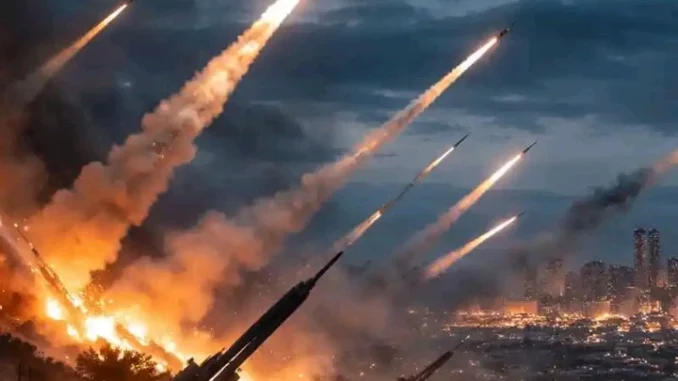
The United States has launched a second wave of military strikes against targets in Iran, sharply escalating regional tensions as Washington asserts its commitment to protecting international shipping lanes.
According to an official statement posted by U.S. Central Command (CENTCOM) on its verified X account on July 15, 2026, American forces initiated the latest operations at 3:00 p.m. Eastern Time.
The mission was directed at Iranian military capabilities allegedly being utilized to threaten civilian and commercial vessels navigating the strategically vital Strait of Hormuz.
CENTCOM emphasized that the core objective of the afternoon operation was to diminish Iran’s capacity to disrupt maritime movement in the waterway, which handles a significant portion of the world’s daily oil and commercial trade.
The military command emphasized the global importance of the transit corridor in its statement:
“The strikes are targeting Iranian military capabilities used to threaten vessels freely transiting through the Strait of Hormuz, an international waterway vital to global commerce.”
The Department of Defense reiterated that keeping these shipping routes safe remains an absolute priority for US forces stationed in the Middle East.
The strikes mark the second time US forces have struck Iranian soil in a single day, indicating a rapid intensification of the ongoing armed confrontation between Washington and Tehran.
Earlier in the day, US assets had conducted a targeted 90-minute strike on Iranian coastal defenses and cruise missile facilities on Greater Tunb Island.
In its statement, CENTCOM made it clear that these offensive maneuvers are being carried out under the explicit authorization of the President:
“The U.S. military is holding Iran accountable at the Commander in Chief’s direction.”
While CENTCOM’s initial statement did not specify the exact locations targeted during the 3:00 p.m. wave or release immediate damage assessments, the command affirmed that the precision assets deployed were strictly focused on military infrastructure tied directly to maritime threats…See_More



Leave a Reply