

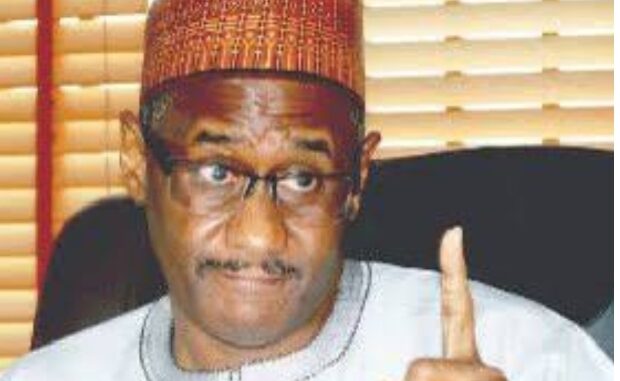
According to a report by Trust TV, on Thursday, February 5, 2026, the political and security landscape of Nigeria has been ignited by a fresh wave of discourse following provocative remarks from Professor Usman Yusuf.
The former executive secretary of the National Health Insurance Scheme (NHIS) voiced significant reservations regarding how security agencies have managed and publicised an alleged conspiracy to overthrow the government.
During a televised segment, the professor emphasised that the gravity of this situation extends far beyond simple arrests or criminal accusations, suggesting that the very foundation of national harmony, trust, and equitable treatment is currently at stake.
The core of his argument centres on the demographic composition of those accused, which he believes carries heavy implications for a country as diverse as Nigeria. In his words, “You have 35 officers; 33 of them are northerners. 99% of them are Muslims. This is not a joke.”
This specific observation served as a stern caution to the authorities, as he noted that such sensitive developments must be managed with extreme care to prevent the escalation of ethnic and religious friction or the deepening of existing societal divisions.
Professor Yusuf drew attention to Nigeria’s complex and often traumatic history with military interventions, asserting that any claim of a coup must be adjudicated strictly within the parameters of established law. He expressed concern that the current approach appears to favour public condemnation over judicial process.
By presenting the case to the citizenry through media channels before a formal court ruling, the government risks undermining the legitimacy of the proceedings and eroding the faith that Nigerians place in their fundamental institutions.
Furthermore, he highlighted a confusing shift in the official narrative, pointing out that what was initially labelled as a routine disciplinary matter was suddenly rebranded as a coup plot several months after the alleged events occurred.
This inconsistency, he argued, creates a vacuum of clarity that the public deserves to have filled with transparent and reliable information, particularly when the survival of democracy is involved.
While acknowledging the imperfections of the current democratic system, the former NHIS chief maintained that it is vastly superior to military governance and must be shielded from instability. He insisted that the constitutional rights of the accused, specifically their right to a fair trial and legal counsel, are non-negotiable.
Yusuf warned that in a pluralistic nation, perceptions of regional or religious bias can be dangerous. He urged security forces to prioritise transparency and evidence-based prosecution to ensure that the rule of law remains the primary anchor for national stability.
If you love political news or like to get more news happening around the globe, use the button below to get more verified news happening around Nigeria and the world today.



Leave a Reply