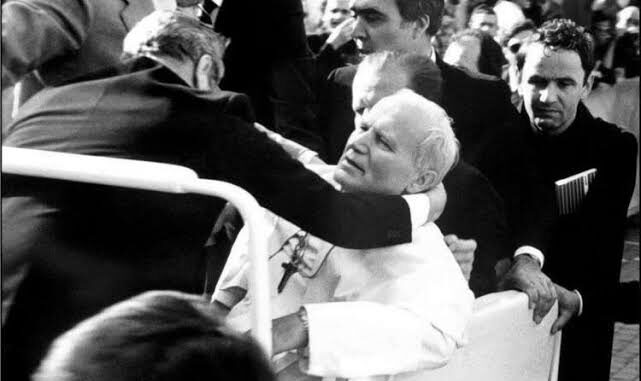
Pope John Paul II is remembered not only for surviving an assassination attempt but also for publicly forgiving the man who tried to kill him. On May 13, 1981, the Polish pontiff was shot four times by Turkish gunman Mehmet Ali Ağca in St. Peter’s Square, Vatican City.
The attack left him critically wounded and sent shockwaves around the world.
The assassination attempt took place as the Pope greeted crowds during his weekly general audience. Ağca fired multiple shots at close range, striking John Paul II in the abdomen and hand.
The pontiff was rushed to hospital, where doctors performed hours of surgery to save his life. His recovery was long and closely followed by millions of Catholics and global observers.
Just days after the shooting, while still hospitalized, Pope John Paul II made a statement that stunned many.
He announced that he had forgiven his attacker. He referred to Ağca as “the brother who shot me” and said he sincerely forgave him. The message of mercy became one of the defining moments of his papacy.
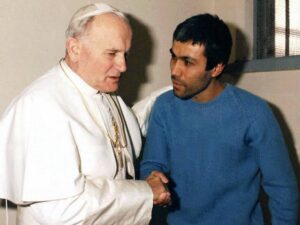
Two years later, on December 27, 1983, John Paul II visited Mehmet Ali Ağca in Rome’s Rebibbia Prison. The two men met privately for about 21 minutes inside the prison cell.
Photographs from the meeting show them seated closely, speaking quietly. During the visit, the Pope gifted Ağca a rosary, reinforcing his message of reconciliation and forgiveness.
In 2000, following a request from Pope John Paul II, Ağca was pardoned by the Italian president. He was subsequently deported to Turkey, where he served additional time for crimes committed before the assassination attempt. The Pope never publicly disclosed the details of their private prison conversation.
Beyond the dramatic events themselves, John Paul II later linked his survival to divine intervention. He credited the Virgin Mary with saving his life, noting that the shooting occurred on May 13, the anniversary of the first reported apparition of Our Lady of Fátima in 1917.
One of the bullets removed from his body was later placed in the crown of the statue of Our Lady of Fátima at the shrine in Portugal…See More



Leave a Reply