MNorth Korea has reportedly revised its constitution to mandate automatic nuclear retaliation if leader Kim Jong Un is assassinated or if the country’s nuclear command structure is threatened.
The March 2026 amendment, confirmed by South Korean intelligence and reported by outlets including Fox News, The Telegraph, and IntelliNews, effectively establishes what analysts describe as a built-in “dead man’s switch” within Pyongyang’s nuclear doctrine.
According to the reported intelligence findings, the constitutional update formalizes an automatic response mechanism, signaling that any attempt to eliminate North Korea’s leadership or disable its nuclear command infrastructure would trigger a retaliatory nuclear strike. The move marks a significant escalation in North Korea’s deterrence posture.
The policy shift comes in the wake of the assassination of Iran’s Supreme Leader Ali Khamenei and several advisers in US-Israeli strikes earlier this year. North Korean officials reportedly view that event as a cautionary example of leadership decapitation in modern conflict. By embedding automatic retaliation into its constitutional framework, Pyongyang appears to be reinforcing its message that any similar attempt against Kim Jong Un would carry catastrophic consequences.
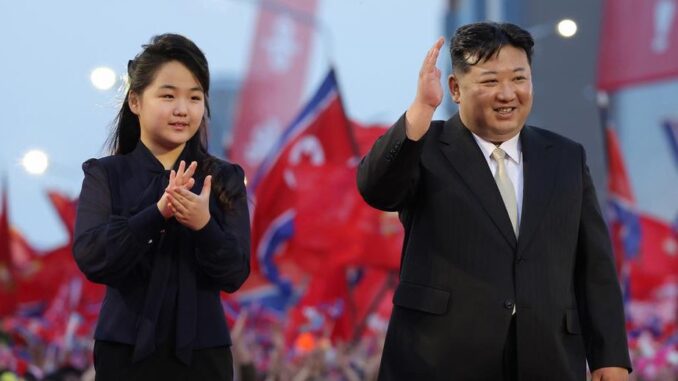
Images circulating alongside the reports show Kim Jong Un waving at a public event with his daughter, Kim Ju-ae. The imagery has been interpreted by analysts as emphasizing regime continuity and dynastic succession, reinforcing the perception that the leadership structure remains stable and protected despite heightened global tensions.
North Korea has previously strengthened its nuclear doctrine in recent years, including legislation outlining conditions for preemptive or retaliatory nuclear use. However, embedding such language directly into the constitution signals a more formalized and institutionalized approach to deterrence.
Security experts note that automatic retaliation doctrines are designed to deter adversaries by removing ambiguity about response. However, they also raise concerns about escalation risks, command-and-control vulnerabilities, and the possibility of miscalculation during crises….See More





Leave a Reply