Iranian President Masoud Pezeshkian has declared that Iran’s finger is on the trigger while pledging that the country will not abandon Lebanon, a statement that reinforces Tehran’s alliance with Lebanese groups, particularly Hezbollah, and signals Iran’s readiness to respond militarily if the fragile US-Iran ceasefire collapses or if its regional allies continue to come under sustained attack.
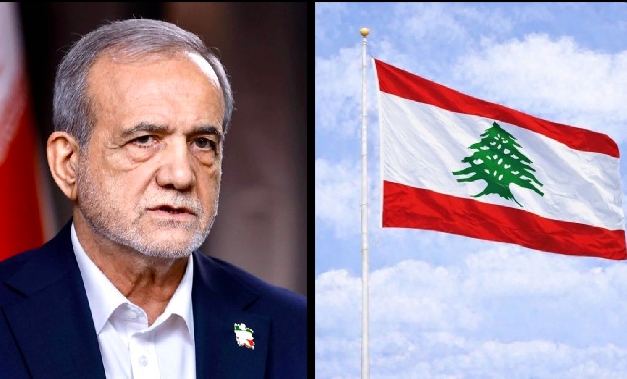
The statement, shared by BRICSinfo alongside Pezeshkian’s portrait and the Lebanese flag, comes in the context of a ceasefire that appears to exclude Lebanon from its terms, allowing Israel to continue conducting major airstrikes on Hezbollah positions and infrastructure in Beirut and southern Lebanon even as direct US-Iran hostilities are temporarily paused.
The phrase finger on the trigger is unambiguous. It is a threat delivered in language designed to communicate readiness, imminence, and the willingness to act without further warning if circumstances cross whatever line Iran has drawn. Pezeshkian is not speaking metaphorically. He is stating that Iran is prepared to resume or escalate military operations, and that the decision to do so rests on a trigger that could be pulled at any moment depending on how events in Lebanon and the broader region unfold.
The pledge not to abandon Lebanon is equally significant. It reaffirms Iran’s commitment to Hezbollah and to Lebanon more broadly as a critical front in its network of alliances and proxies across the Middle East.
Hezbollah is not just a Lebanese political and military organisation. It is an extension of Iranian power and influence, a tool through which Tehran projects force, deters Israel, and maintains strategic depth in the Levant. Any indication that Iran might reduce its support for Hezbollah or step back from Lebanon would signal a weakening of that network and embolden adversaries.
Pezeshkian’s statement forecloses that possibility and makes clear that Iran will continue to back Hezbollah regardless of the costs or consequences.
The context is critical. The US-Iran ceasefire, announced earlier in the week, was framed as a two-week pause in hostilities that would allow for the reopening of the Strait of Hormuz and create space for broader negotiations. But the ceasefire appears not to cover Lebanon, a gap that allows Israel to continue its campaign against Hezbollah without technically violating the terms of the agreement. Since early March, Israeli strikes on Lebanon have killed hundreds of people, many of them civilians, and caused widespread destruction in Beirut’s southern suburbs and in villages across the south.
The fact that those strikes have continued even after the ceasefire was announced suggests that either the ceasefire was never intended to apply to Lebanon or that Israel and the US view Hezbollah as outside the scope of the agreement.
For Iran, that distinction is unacceptable. Hezbollah is not a separate issue. It is part of the same conflict, and attacks on Hezbollah are attacks on Iranian interests. If the ceasefire does not protect Lebanon, then from Tehran’s perspective, the ceasefire is incomplete and potentially meaningless.
Pezeshkian’s statement is a warning that Iran will not sit by while its ally is destroyed, and that continued Israeli strikes on Lebanon could become the trigger that breaks the ceasefire and reignites direct confrontation between Iran and the US-Israeli coalition….See More






Leave a Reply