

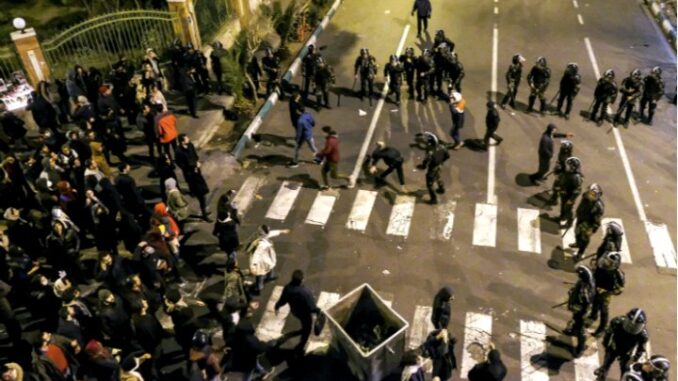
According to an Al Jazeera English report of Sunday 4 of January 2026, sporadic protests have erupted in Tehran and several other Iranian cities. The latest development is as local media report continuing unrest and clashes, particularly in western regions of Iran. While the demonstrations have not yet developed into a nationwide movement, their persistence reflects growing public frustration over economic conditions and political grievances.
The protests began on December 28 when shopkeepers in several cities launched strikes to protest economic pressures, including rising prices and declining purchasing power. Initially focused on livelihoods and market conditions. However, the demonstrations expanded over the following days, with participants voicing broader political demands alongside calls for economic relief.
According to Al Jazeera’s Tohid Asadi who reported from Tehran on Sunday, the protests remain scattered, rather than co-ordinated across the country. However, he noted that tensions continue to surface intermittently in different urban centers.
“From time to time and sporadically, we witness protests, such as last night in Tehran, Kazerun and other cities,” Asadi said. He added that 14 people, including members of the security forces, have been killed since the demonstrations began.
Asadi warned that the situation could worsen if authorities fail to respond effectively to public demands. “There might be further escalations if the government cannot come up with concrete and practical actions,” he said.
In Tehran, protests on Saturday evening were described as “limited” by the semi-official Fars news agency. The outlet reported that gatherings in the capital were generally small in scale, involving relatively modest numbers of participants.
Fars said that the protests were “generally made up of groups of 50 to 200 young people,” suggesting that while discontent remains visible, it has not yet translated into mass mobilization in the capital. Nevertheless, demonstrations were reported across several districts of Tehran, highlighting the geographic spread of the unrest within the city.
According to the agency, protesters were seen in Tehran Pars in the eastern part of the capital, as well as in western neighborhoods including Ekbatan, Sadeghieh and Sattarkhan. Additional gatherings were reported in the southern districts of Naziabad and Abdolabad.
Outside the capital, local media have also pointed to clashes in western provinces, where tensions have periodically intensified. While official statements have emphasized security measures and restraint, the continuation of protests suggests that underlying grievances remain unresolved.
As Iran enters a second week of unrest, attention remains focused on whether the demonstrations will broaden further or subside in the absence of concrete policy responses. For now, the protests continue to flare up intermittently, reflecting a volatile and uncertain situation across parts of the country.
If you love political news or like to get more news happening around the globe, use the button below to get more verified news happening around Nigeria and the world today.



Leave a Reply