

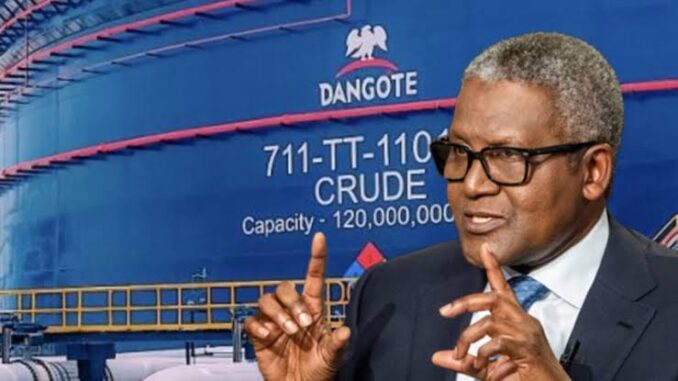
Oil marketers in Nigeria have said that the Dangote Petroleum Refinery may serve as the country’s major lifeline amid fears that tensions surrounding a potential Iran-related conflict in the Middle East could disrupt global oil supply and push fuel prices higher.
Industry stakeholders say that while petrol prices could rise to ₦1,500 per litre, such a situation would still be preferable to experiencing fuel scarcity across the country, which could severely affect transportation, businesses, and daily economic activities.
The warning comes as concerns grow globally about instability in the Middle East, a region responsible for a significant portion of the world’s crude oil supply. Analysts note that any escalation of conflict involving Iran could affect oil shipping routes, increase crude prices internationally, and trigger higher fuel costs in countries that rely heavily on imported petroleum products.
According to marketers, Nigeria’s 650,000 barrels-per-day Dangote Refinery, located in Lagos, has the potential to reduce the country’s vulnerability to global supply shocks. By refining crude oil locally, the facility could help ensure more stable fuel availability even when international markets face disruptions.
Industry operators say that before the start of domestic refining at the Dangote facility, Nigeria depended largely on imported refined petroleum products, making the country highly exposed to global price volatility and supply chain disruptions.
Marketers explained that while a petrol price of ₦1,500 per litre would place financial pressure on many Nigerians, the alternative—fuel scarcity—could lead to even more severe consequences, including long queues at filling stations, black-market fuel sales, and significant increases in transportation costs.
Fuel shortages have historically caused major disruptions across Nigeria, with citizens often spending hours or even days searching for petrol during periods of scarcity.
Energy experts also point out that Nigeria’s current fuel pricing structure is largely influenced by market forces since the removal of petrol subsidies in 2023. This means that fluctuations in global crude prices, exchange rates, and supply conditions can directly affect the pump price of petrol.
Stakeholders in the petroleum sector have therefore emphasized the importance of strengthening domestic refining capacity, including the Dangote Refinery and the rehabilitation of government-owned refineries in Port Harcourt, Warri, and Kaduna.
They argue that a combination of these facilities could significantly improve Nigeria’s energy security, reduce reliance on imports, and stabilize fuel supply in the long term.
However, economic analysts also warn that rising petrol prices could further increase inflation and the cost of living, as fuel costs directly impact transportation, food distribution, and manufacturing expenses….See More





Leave a Reply