Israel has revealed that the assassination of senior Iranian political figure Ali Larijani was made possible through intelligence provided by residents of Tehran over a critical 24-hour period, with an Israeli official saying that real-time information from civilians on the ground played a decisive role in identifying and tracking the target.
The disclosure was reported by The Times of Israel on March 17, 2026, and represents one of the most significant admissions by Israeli officials regarding the role of internal Iranian sources in shaping the outcome of military and intelligence operations during the ongoing conflict.
According to the Israeli official, who spoke to Iran International, the intelligence services received valuable and actionable information from people living inside Tehran that enabled them to accurately locate and monitor Larijani’s movements in the hours leading up to the operation. “The assassination of Larijani was made possible thanks to valuable intelligence that Israeli intelligence services received from residents of Tehran over the past 24 hours,” the official said.
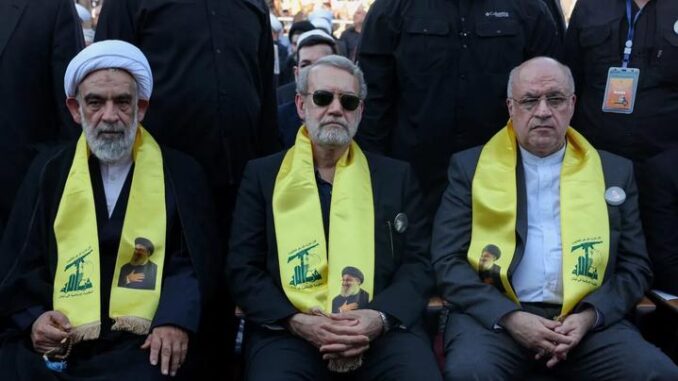
The official went further, suggesting that Larijani’s own behaviour in the days before his death contributed significantly to his exposure. Rather than maintaining a low profile during a period of active military conflict, the official said Larijani had been appearing frequently in public, including at Quds Day rallies, and had been engaging with both local and international media. The official described this conduct as arrogant and said it ultimately made it easier for intelligence operatives to identify and track him.
“In recent days, Larijani had behaved arrogantly, appearing frequently in public, including at Quds Day rallies, engaging with both local and international media, and thereby exposing himself to public view, which ultimately led to his identification,” the official said.
The revelation raises profound questions about the internal dynamics within Iran during the ongoing conflict. The fact that Israeli intelligence is openly claiming to have received cooperation from civilians inside Tehran suggests that there may be significant segments of the Iranian population who are either opposed to the current regime or willing to provide information to foreign intelligence services for reasons that remain unclear. Whether this cooperation is motivated by political opposition, financial incentives, personal grievances, or other factors, the implications for the Iranian government are deeply concerning.
The Israeli official did not stop at the Larijani operation. He went on to describe a broader and ongoing pattern of intelligence cooperation from within Iran that extends well beyond a single targeted assassination. According to the official, Israeli intelligence agencies continue to receive numerous reports from inside Tehran that provide precise locations of Basij and Islamic Revolutionary Guard Corps checkpoints throughout the city. “Intelligence agencies continue to receive numerous reports from within Tehran that precisely guide them to the locations of Basij and IRGC checkpoints, significantly aiding their efforts,” the official said.
This steady flow of detailed information from civilian sources appears to have significantly enhanced the operational precision of Israeli and allied military operations against Iranian targets. It suggests an evolving pattern in which intelligence gathered from ordinary people on the ground is increasingly shaping strategic military decisions and outcomes, rather than relying solely on satellite imagery, electronic surveillance, or traditional espionage methods.
Ali Larijani was one of the most prominent political figures in the Islamic Republic. He served as Speaker of the Iranian Parliament for over a decade and held several other senior positions within the Iranian political establishment over the course of his career. He was widely regarded as a pragmatic conservative within Iranian politics and had run for the presidency on multiple occasions. His elimination represents another major blow to Iran’s political and leadership structure, which has already been severely weakened since the conflict began on February 28 with the reported killing of Supreme Leader Ali Khamenei in the opening strikes.
The loss of multiple senior figures in such a short period has raised serious questions about the Iranian regime’s ability to maintain cohesion and command authority during the conflict. Military analysts say that the systematic targeting of Iran’s leadership suggests a deliberate strategy by Israel and the United States to dismantle the regime’s decision-making apparatus from the top down, leaving military forces on the ground without clear strategic direction.
The claim that Iranian civilians are actively providing intelligence to foreign powers will likely have significant consequences within Iran itself. The Iranian government has historically dealt harshly with anyone suspected of cooperating with foreign intelligence services, and the public nature of these Israeli claims could trigger widespread crackdowns, arrests, and an atmosphere of suspicion within Tehran and other major cities. It could also deepen existing tensions between the Iranian population and the security forces, particularly the Basij and IRGC, whose checkpoint locations are allegedly being reported to the enemy….See More







Leave a Reply