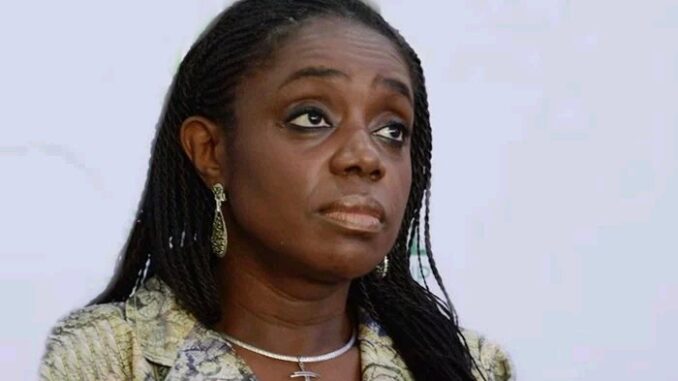
In a report by Channels Television on Friday, January 2, 2026, former Finance Minister Kemi Adeosun asserted that her fellow ministers during her tenure recognized that the fuel subsidy was detrimental to Nigeria and that ongoing funding for it was not viable.
She conveyed this viewpoint during a televised policy discussion while reflecting on the economic choices made during her time in office and the persistent challenges related to the fuel subsidy in Nigeria.
Adeosun revisited past internal government discussions regarding the subsidy, shedding light on why the policy remained for so long despite prevalent concerns.
She mentioned that the federal cabinet had acknowledged the subsidy had outlived its usefulness and that many ministers realized it no longer achieved its intended goals, turning into a significant financial liability for the nation.
Adeosun emphasized that the problem stemmed not from a lack of understanding or awareness but from the challenges of making politically sensitive decisions.
She noted that even with clear evidence showing the harmful effects of subsidies, successive administrations found it difficult to make decisive moves due to public pressure and fear of backlash.
Additionally, she revealed that investigations during her tenure showed a considerable amount of subsidized fuel was being illegally exported to neighboring countries, leading Nigeria to effectively subsidize fuel consumption beyond its own borders, which further strained public finances.
She concluded that the scale of the issue indicated the subsidy was no longer benefiting Nigerian citizens as intended but instead resulted in a loss of public funds without any advantage to the economy or the population.
Adeosun warned that the financial burden of maintaining the subsidy had grave implications for national development, as money spent on fuel subsidies limited the government’s capacity to invest in crucial areas like infrastructure, education, and healthcare.
She stressed that the opportunity cost was substantial, as funds intended for subsidies could have been redirected towards enhancing public services.
In her perspective, continuing to fund the fuel subsidy sacrificed long-term progress for short-term price stabilization, with no evidence of positive results. She remarked, “Essentially, the federal government was subsidizing not just Nigeria but the entirety of West Africa, which was unaffordable. Money spent on subsidies was money that could not be invested in roads, education, or healthcare, with no tangible benefits from the fuel subsidy. Everyone recognized that the policy needed to end.”
If you love political news or like to get more news happening around the globe, use the button below to get more verified news happening around Nigeria and the world today.







Leave a Reply