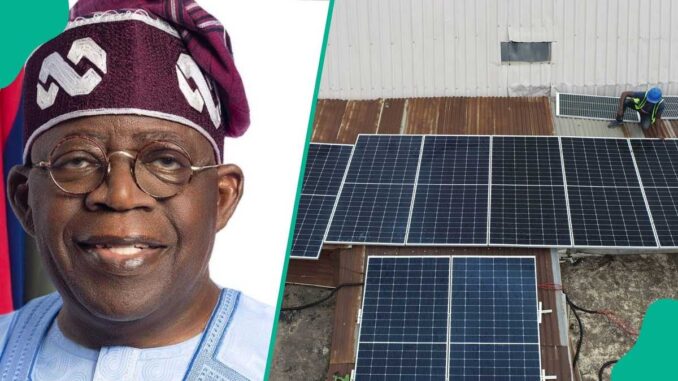
The Federal Government of Nigeria (FG) has announced plans to deploy 1,350 mini solar grids across the country as part of a long-term strategy to tackle the nation’s persistent power crisis and provide electricity to an estimated 17.5 million Nigerians by 2027.
The initiative, which falls under the government’s broader energy transition and renewable energy policies, aims to increase access to clean, reliable, and sustainable electricity, particularly for rural and underserved communities that have historically struggled with grid connectivity.
According to officials from the Ministry of Power, the mini solar grids will function as localized power systems capable of generating and distributing electricity to communities without waiting for the national grid expansion. Each mini-grid will combine solar photovoltaic panels, battery storage systems, and local distribution networks to ensure continuous power supply even during periods of low sunlight.
The Federal Government noted that the project is expected to boost economic activities in off-grid areas by providing reliable electricity for small businesses, schools, hospitals, and households. Officials also emphasized that the deployment of mini solar grids is in line with Nigeria’s commitment to clean energy and climate action goals, reducing dependency on fossil fuels and cutting greenhouse gas emissions.
The project is being implemented in collaboration with private sector partners, international energy firms, and development organizations to ensure technical expertise, financing, and operational sustainability. Community engagement and local ownership are also considered key to the long-term success of the mini-grids.
Experts say that mini-grid systems have proven effective in sub-Saharan Africa, where conventional electricity infrastructure often fails to reach rural populations. By providing affordable, decentralized electricity, the initiative can also reduce the reliance on diesel generators, which are expensive and environmentally damaging.
In addition to electricity provision, the program is expected to create thousands of jobs in installation, maintenance, and operations, further supporting local economies and skills development in renewable energy technologies.
The Federal Government has indicated that the mini-grid program will be rolled out in phases, prioritizing areas with the highest energy deficits. The first phase will involve pilot installations to test operational efficiency and community acceptance, after which full-scale deployment across all targeted regions will commence.
Energy analysts have welcomed the initiative, noting that improving electricity access in rural and semi-urban areas is critical for socioeconomic development, education, and healthcare. They also highlighted the potential for Nigeria to become a leader in decentralized renewable energy in Africa if the program is effectively implemented.
However, analysts stress that for the project to succeed, it will require consistent funding, effective regulatory frameworks, and security measures to protect infrastructure in areas prone to vandalism and theft….See More








Leave a Reply