
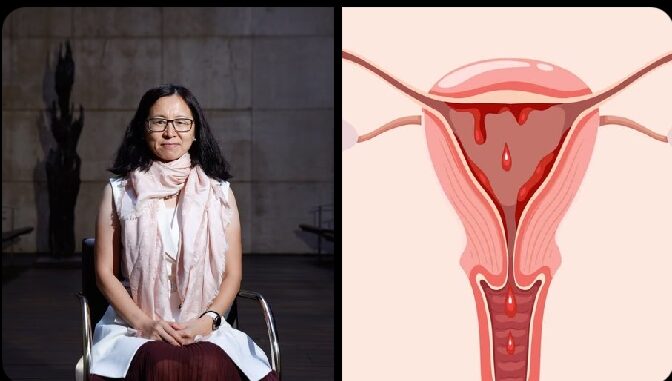
Chinese biologist Hongmei Wang of the Chinese Academy of Sciences is researching strategies to extend female fertility by reducing the frequency of menstruation to once every three months.
The concept is based on the idea that fewer ovulatory cycles could potentially slow the depletion of a woman’s ovarian reserve, which naturally declines over time.
Women are born with approximately one to two million eggs, a number that decreases significantly before puberty to around 300,000. Throughout reproductive life, only a small fraction of these eggs are ovulated, while the majority are lost through a natural process called atresia.
Frequent menstrual cycles are associated with ongoing hormonal fluctuations and follicle recruitment, contributing to the gradual decline in ovarian reserve.
Wang’s research explores whether modifying the hormonal rhythm of the menstrual cycle could help preserve egg quantity and function.
In addition to theoretical modeling, her work includes experimental stem cell therapies aimed at combating ovarian aging. According to a 2024 paper published in Cell Discovery and subsequent interviews in 2026, her team has tested stem cell–based interventions in monkey models to examine whether aging ovarian tissue can be rejuvenated or supported.
The research does not suggest eliminating menstruation entirely but proposes reducing its frequency, similar in concept to certain existing hormonal contraceptives that allow for extended cycles.
However, Wang’s work focuses more specifically on ovarian longevity and fertility preservation rather than contraception.
The topic has generated widespread online discussion, particularly among women who expressed interest in relief from monthly symptoms such as pain, mood fluctuations, and financial costs associated with menstrual care.
Some commenters also linked the research to broader demographic trends, including delayed childbearing and declining birth rates in several countries.
At the same time, medical experts caution that long-term hormonal manipulation carries potential risks and would require extensive clinical trials to assess safety.
Questions remain about how reduced cycling might affect overall endocrine balance, cardiovascular health, bone density, and cancer risk.
While certain extended-cycle contraceptives are already approved and widely used, the long-term impact of fertility-preservation-focused hormonal interventions would need thorough evaluation.
Ovarian aging is influenced by multiple factors beyond cycle frequency, including genetics, environmental exposures, and overall health.
While reducing ovulation frequency may theoretically slow egg depletion, the biology of atresia and follicle recruitment is complex, and not all egg loss is directly tied to ovulation itself….See More





Leave a Reply