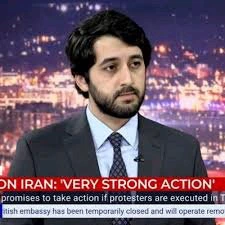
Jonathan Sayeh, a research analyst at the Foundation for Defense of Democracies, has said that one of the major obstacles facing the United States in its military campaign against Iran is the financial imbalance between destroying Iranian military equipment and Iran’s ability to replace those assets at a much lower cost.
Speaking during an interview with News 24 on Wednesday, August 5, 2026, Sayeh explained that this economic disparity plays into Iran’s long-term military strategy, which is designed to endure a prolonged conflict rather than secure a quick conventional victory against a more powerful opponent.
According to the analyst, the resources required by the United States to destroy Iranian missile launchers, stockpiles and other military assets are significantly greater than the amount Iran needs to rebuild or replace them. He argued that this cost difference provides Tehran with a strategic advantage in a drawn-out confrontation.
“When it comes to taking out Iran’s military assets, whether it’s missiles themselves or the launchers or the stockpiles, they’re a lot more expensive to hit than for them in Iran to replace them,” Sayeh said.
He further explained that Iran’s military doctrine has long been centered on exhausting stronger adversaries through sustained resistance. Instead of relying on conventional military superiority, Tehran seeks to outlast opponents by making prolonged military operations increasingly costly.
Sayeh also addressed reports suggesting that the United States could face pressure on its supply of precision-guided munitions if the conflict continues. While acknowledging that such reports have attracted attention, he argued that Iran’s strategic calculations are influenced more by Washington’s broader political objectives than by concerns over American weapons stockpiles.
According to him, Iranian leaders continue to believe that the United States is primarily interested in compelling Tehran to return to negotiations rather than pursuing the overthrow of the Iranian government. He said this perception remains a key factor shaping Iran’s long-term approach to the conflict.
His remarks come amid ongoing discussions about the sustainability of U.S. military operations against Iran, with analysts continuing to assess the economic and strategic implications of an extended conflict between both countries…See_More







Leave a Reply