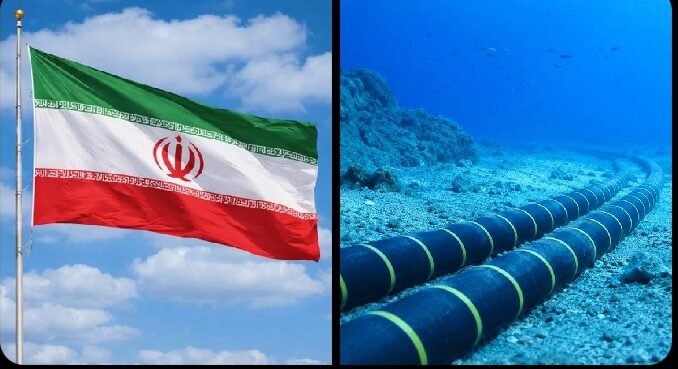
An X post by @BRICSinfo has highlighted a report from Iran’s Fars News claiming that Tehran plans to seize control of undersea internet cables in the Strait of Hormuz.
The Strait of Hormuz is widely known as a critical oil transit chokepoint, but it also serves as a major digital artery. Multiple fiber-optic cables pass through the narrow waterway, carrying an estimated 15 to 20 percent of global internet and financial traffic.
These cables connect Europe, Asia, and Gulf states, many of which rely on them for more than 90 percent of their international connectivity, banking transactions, and data services.
Reports referencing IRGC-linked media have recently emphasized the vulnerability of undersea cable infrastructure, portraying it as strategic leverage beyond traditional oil disruptions.
While there has been no independently verified action against cables at the time of reporting, the rhetoric signals that digital infrastructure is increasingly viewed as part of geopolitical calculations.
Undersea fiber-optic cables form the backbone of global communications, enabling everything from financial markets to cloud computing and government communications.
Damage or disruption in a concentrated chokepoint like Hormuz could cause latency spikes, rerouting of traffic, and temporary service degradation, though redundancy systems are designed to mitigate large-scale outages.
The claim emerges amid escalating regional conflict in 2026, with naval deployments, shipping disruptions, and economic pressure shaping tensions between Iran and Western powers. Strategic messaging about cable control may serve as deterrence signaling rather than an immediate operational move, analysts suggest.
International telecommunications operators and Gulf governments closely monitor such developments, given the economic dependence on uninterrupted data flow. Historically, undersea cables have occasionally been damaged by accidents or sabotage in various regions, prompting heightened protection measures….See More





Leave a Reply