
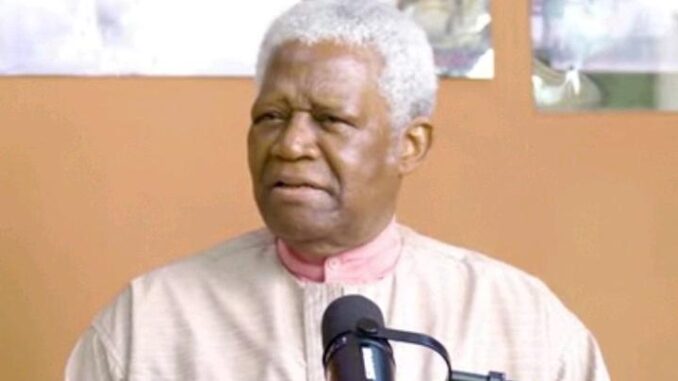
Ike Omar Nwachukwu, a retired military officer and diplomat, has provided a fresh perspective on the events surrounding the 1966 Nigerian coup d’état, suggesting that ethnic identity was not the primary consideration at the onset of the uprising.
Speaking during an interview on The Legacy Series, a platform known for documenting firsthand accounts from key historical figures, Nwachukwu reflected on the early moments of the January 1966 coup, which marked a turning point in Nigeria’s political history. According to him, the initial reaction within the military and among the public was not shaped by ethnic divisions.
Recalling the atmosphere at the time, he said, “When the coup occurred, the January Coup, no one knew anything about being Igbo or not being Igbo. It was a coup that occurred and the names that we had were Nzeogwu and Ademoyega.” He was referring to Chukwuma Kaduna Nzeogwu and Emmanuel Ifeajuna Adegboyega, two of the prominent officers linked to the coup.
Nwachukwu’s account challenges long-standing narratives that interpret the 1966 coup primarily through an ethnic lens, particularly as later developments deepened divisions across the country. He maintained that, at the time of the coup itself, the focus was on the sudden overthrow of the government rather than the ethnic backgrounds of those involved.
The January 1966 coup led to the collapse of Nigeria’s First Republic and set off a chain of political and military events that significantly altered the country’s trajectory. These developments eventually contributed to the Nigerian Civil War, a period of intense national conflict that has continued to shape historical discourse.
Over the years, historians and political analysts have debated the motivations behind the coup, with ethnicity often cited as a major factor. However, Nwachukwu’s remarks add nuance to the discussion, suggesting that early perceptions may have differed from later interpretations shaped by subsequent events….See More
Leave a Reply