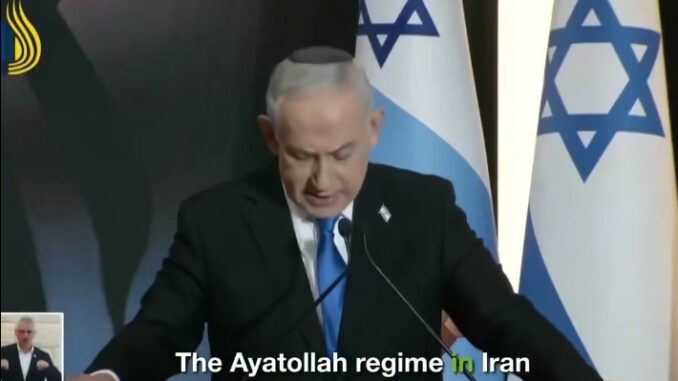
Israeli Prime Minister Benjamin Netanyahu said during a Holocaust Remembrance event that Iran’s regime had been planning the “nuclear annihilation” of Israel, warning that inaction would have meant allowing another Holocaust.
In remarks delivered around April 13, 2026, Netanyahu credited recent Israeli military actions, including what he referred to as Operation Roaring Lion, with preventing what he described as an existential threat.
The speech resurfaced online after BRICSinfo shared a video clip of the comments, presenting them as breaking news amid ongoing Israel-Iran tensions.
Speaking at the solemn commemoration, Netanyahu drew direct parallels between the Holocaust and modern-day threats facing Israel.
He said Iran had intended to use nuclear bombs and ballistic missiles against the Jewish state, arguing that Israel could not afford to ignore such dangers. “If we do not act, we are allowing another Holocaust,” Netanyahu said in the clip circulated online. He added that decisive military action was necessary to ensure that history would not repeat itself.
The prime minister pointed to Operation Roaring Lion as a key measure that disrupted Iran’s alleged plans. While he did not disclose operational details in the speech, Israeli officials have previously described the operation as a series of coordinated strikes targeting Iranian-linked assets.
Netanyahu framed the operation as preemptive and defensive, saying it was aimed at neutralizing a direct threat to Israel’s survival.
The video was shared by the BRICSinfo account, which often posts geopolitical developments involving BRICS-aligned nations and Western powers. Although the speech took place earlier in April, the clip gained renewed attention as tensions between Israel and Iran remain elevated.
The post generated significant engagement, with many users debating the substance and timing of the remarks.
Reactions online reflected widespread skepticism. Some commenters questioned the evidence supporting Netanyahu’s claim that Iran was on the verge of launching a nuclear attack. Others pointed to his long history of warning about Iran’s nuclear ambitions, arguing that similar alarms have been raised for years without public proof of an imminent strike.
Critics also suggested that the strong rhetoric could be influenced by domestic political pressures, as Netanyahu continues to navigate internal challenges and coalition disputes at home.
Supporters of the prime minister, however, defended the speech as a necessary reminder of Israel’s security realities. They argue that Iran’s ballistic missile development and past statements by Iranian officials about Israel justify a firm and proactive stance.
For them, linking contemporary threats to Holocaust remembrance underscores the gravity of the situation.
The broader context includes ongoing regional instability and a longstanding shadow conflict between Israel and Iran involving cyber operations, proxy forces, and targeted strikes. Israel has consistently opposed Iran’s nuclear program, viewing it as a direct threat, while Tehran maintains that its nuclear activities are for peaceful purposes….See More





Leave a Reply