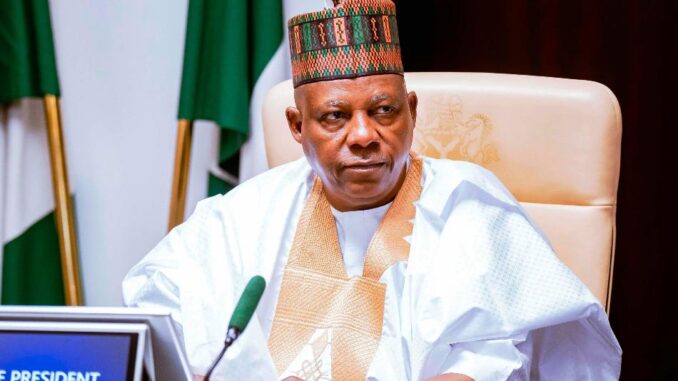
Vice President Kashim Shettima has stated that one cannot bully their way into the presidency, adding that there are better qualified candidates from the South East than Peter Obi.
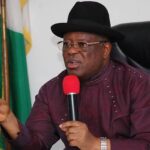
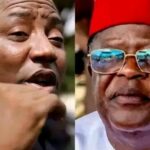
Shettima specifically named David Umahi, the current Minister of Works and former governor of Ebonyi State, and Rochas Okorocha, former governor of Imo State and a senator, as examples of leaders he considers superior to Obi in qualification and capability.
The remarks, shared by NigeriaStories, reflect a deliberate pushback from the ruling All Progressives Congress against Obi, a prominent opposition figure and former Anambra State governor whose 2023 presidential campaign galvanised youth support and reshaped the political landscape even though he did not win.
The statement drew immediate and heavy engagement, with thousands of replies flooding the post within hours. The vast majority came from Obi supporters, commonly referred to as Obidients, who criticised Shettima’s assessment and defended Obi’s record on governance, fiscal responsibility, and transparency.
The replies were not polite. They were scathing, personal, and backed by comparisons that did not favour the candidates Shettima put forward as alternatives.
Users pointed to Obi’s tenure as governor of Anambra State, where he is credited with leaving the state with savings and investments rather than debt, a rarity in Nigerian politics. They contrasted that record with the tenures of Umahi and Okorocha, both of whom have faced accusations of mismanagement, corruption, and vanity projects that drained state resources without delivering proportional benefits to the populations they governed. The comparison was stark and repeated across hundreds of replies.
Obi saved money. Umahi and Okorocha spent it, and not always wisely or transparently.
Rochas Okorocha’s name in particular triggered mockery and disbelief. His time as Imo State governor is remembered not for transformative governance but for the erection of numerous statues, including controversial monuments to foreign leaders, and allegations of financial mismanagement that left the state deeply in debt. The idea that Okorocha is better qualified than Obi was treated as either a joke or evidence that Shettima is disconnected from the reality on the ground. David Umahi fared slightly better in the replies, but not by much. His record in Ebonyi includes infrastructure projects that supporters praise and critics describe as poorly executed or overpriced, and his defection from the PDP to the APC, followed by his appointment as minister, has been framed by opponents as opportunism rather than principle.
The phrase bully into the presidency was also dissected and rejected. Obi’s supporters argue that their candidate did not bully anyone. He campaigned, mobilised a grassroots movement, and inspired millions of Nigerians, particularly young people, to believe that change was possible. If that constitutes bullying, the argument goes, then the problem is not with Obi but with a political establishment that views popular support as a threat rather than a mandate.
The subtext of Shettima’s statement is clear. The APC views Peter Obi as a problem, not because he won the 2023 election, he did not, but because he demonstrated that an opposition figure outside the traditional PDP-APC duopoly can attract massive support and challenge the narratives that have sustained the two-party dominance for over two decades. Obi’s popularity, particularly in the South East and among Nigeria’s diaspora and youth demographics, represents a political force that the ruling party cannot ignore and has so far struggled to neutralise….See More


Leave a Reply