

Iranian ballistic missiles equipped with cluster warheads struck central Israel on April 6, 2026, causing urban damage, civilian injuries, and fires across areas near Tel Aviv in what represents one of the most significant direct attacks on Israeli population centres in the country’s recent history.
The strike is part of an escalating conflict between Iran and a US-Israeli coalition that began on February 28, 2026, and has since expanded into a multi-front war involving air strikes, naval operations, cyber attacks, and now ballistic missile barrages targeting Israeli cities.
Cluster munitions are designed to maximise damage over wide areas by dispersing dozens of smaller bomblets from a single missile warhead. Each bomblet functions as an independent explosive, saturating a target zone and overwhelming point defence systems that are designed to intercept single warheads. Israel’s Iron Dome, David’s Sling, and Arrow missile defence systems are among the most advanced in the world, but they are calibrated to intercept missiles with unitary warheads.
When a missile releases a cluster payload at high altitude, the defence system must choose between tracking the carrier or the dispersed bomblets, a choice that often results in some munitions reaching their targets.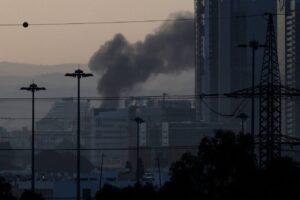
The images accompanying reports of the strike showed black smoke plumes rising over cityscapes, debris-strewn streets littered with damaged and burning vehicles, and intense fires consuming buildings and infrastructure.
The visuals were consistent with verified impacts documented by Israeli media, emergency services, and international human rights observers who have been tracking the conflict’s escalation.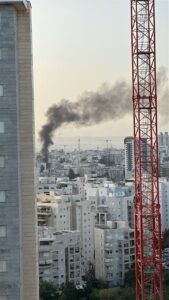
The damage was not confined to a single neighbourhood or military installation. It spread across civilian areas, marking a deliberate or unavoidable shift toward strikes that affect non-combatant populations.
Israeli authorities have not publicly released full casualty figures from the April 6 strike, but reports indicate that multiple civilians were injured and that emergency services were stretched responding to fires, structural collapses, and unexploded ordnance scattered across impact zones. The psychological impact of missiles penetrating Israel’s vaunted air defence network and striking the country’s urban core is significant, challenging the public narrative that Israeli territory is protected and that Iranian capabilities are insufficient to reach Israeli cities with meaningful effect.
Iran’s use of cluster warheads represents a tactical adaptation to Israeli defences and a signal that Tehran is willing to escalate not just the scale but the lethality and civilian cost of its retaliation. Cluster munitions are controversial under international law, with over one hundred countries having signed the Convention on Cluster Munitions banning their use due to the indiscriminate harm they cause and the long-term danger posed by unexploded bomblets. Neither Iran nor Israel are signatories to that treaty, and both have used or been accused of using such weapons in past conflicts.
The broader context is a war that has moved far beyond limited strikes and symbolic retaliation. What began as targeted US and Israeli operations against Iranian nuclear and military infrastructure has escalated into sustained campaigns involving the destruction of civilian energy and water systems, attacks on regional allies, and now direct missile strikes on Israeli cities. The cycle of escalation shows no sign of slowing, and each new phase introduces weapons and tactics that make the conflict harder to contain and more likely to draw in additional actors….See More





Leave a Reply