

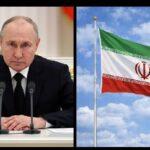
Austria has formally rejected a United States request for airspace access related to ongoing military operations against Iran, citing its constitutional neutrality which has been in place since 1955. The decision, reported by BRICSinfo, places Austria alongside a growing list of European nations that have refused to facilitate American military logistics during the conflict, a pattern that is reshaping the transatlantic relationship in real time.
Austria’s neutrality is not a policy preference. It is a constitutional obligation adopted in the same year the country regained full sovereignty after Allied occupation following the Second World War. The commitment bars Austria from joining military alliances, hosting foreign military bases, or participating in foreign military actions. Unlike NATO members whose refusals represent a political choice that carries alliance consequences, Vienna’s rejection sits on legal bedrock that no sitting government can override without a constitutional amendment. The answer to Washington was never going to be anything other than no.
What makes the decision significant is not Austria’s position in isolation but the company it now keeps. Switzerland, Spain, France, and Italy have all taken steps to limit or deny support for US operations against Iran in recent weeks. Switzerland, like Austria, operates under permanent neutrality. But Spain, France, and Italy are NATO members whose refusals represent something far more consequential. They are treaty allies actively choosing not to support the military objectives of the alliance’s most powerful member.
The cumulative effect on American logistics is substantial. Europe’s airspace is not optional for transatlantic military operations. It is the corridor through which personnel, equipment, and supplies move between the United States and the Middle East. Every closed airspace forces longer routes, higher fuel costs, and greater operational complexity. What began as individual national decisions has become a practical barrier that the Pentagon must now plan around with every sortie and supply run.
BRICSinfo framed the Austrian decision as further evidence of shifting global alliances and deepening strains on the Western security architecture that has underpinned transatlantic relations since the Cold War. The characterisation serves Moscow’s broader narrative, but the underlying facts are difficult to dispute. European nations are distancing themselves from American military action at a pace and scale that would have been difficult to imagine even two years ago….See More





Leave a Reply