
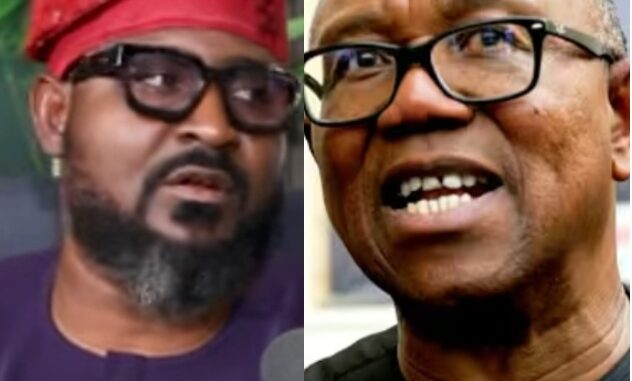
Hon Murtala Dantoro, a prince from the Borgu royal family in Niger State, has given his perspective on the 2027 presidential election and the challenges opposition candidates face in winning support across Nigeria.
Speaking during an interview with MIC On, Friday, February 20, 2026, the prominent political figure offered a deep dive into the shifting sands of the Nigerian political landscape.
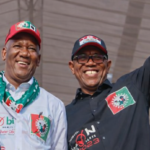
Dantoro’s assessment centred largely on the hurdles facing the Labour Party’s Peter Obi, specifically regarding his reception within the northern geopolitical zones.
During the discussion, Dantoro underscored the complex sociopolitical barriers that often dictate the success or failure of a national campaign, particularly when crossing regional lines.
One of the most striking points made by the Niger State prince was his direct assessment of ethnic perceptions in the North.
He Said, “if he becomes a flag bearer today, they will not listen to him. Do you know why? Because they believe, they have a belief of the Igbos.”
This statement highlights a significant obstacle that Dantoro believes still persists within the collective consciousness of northern voters.
He suggested that these long-standing perceptions are not easily dismantled and remain a primary factor in how the electorate in that region evaluates candidates from the South-East.
For a candidate like Peter Obi, this presents a unique challenge of bridging a gap that is as much about cultural history as it is about current policy.
Dantoro elaborated on the sheer numerical power of the North, noting that the region’s massive population makes it the ultimate kingmaker in any Nigerian presidential contest.
To illustrate the scale of this challenge, one only needs to look at the data from the previous 2023 general election.
In that cycle, while Peter Obi secured approximately 6.1 million votes nationally, his performance in the core northern states was significantly lower than that of his main rivals. For instance, in the northwest, a region with over 22 million registered voters, the APC and PDP maintained a dominant grip.
Dantoro argues that without a seismic shift in northern sentiment, reproducing or exceeding those national numbers in 2027 will be an uphill battle for any candidate who has not yet fully “endeared” themselves to the northern grassroots.
The prince further emphasised that a candidate must first demonstrate competence and commitment before northern voters are willing to fully support them.
Obi, according to Dantoro, would need to prove himself in positions of leadership or governance to gain the confidence of these communities.
He posited that the North tends to favour candidates with a “proven” track record of protecting regional interests or those who have built long-term political alliances within the northern establishment.
H explained, is not a reflection of Obi’s abilities but rather an understanding of voting patterns and regional politics in Nigeria.
It is a matter of establishing a presence that goes beyond social media popularity and enters the realm of traditional, high-stakes political networking.
Dantoro also highlighted that political success in Nigeria requires broad acceptance across all regions.
Candidates must engage with local communities, understand their challenges, and show that they can deliver tangible results.
He suggested that the “Obedient” movement, while vibrant, must find a way to translate its energy into a language that resonates with the rural and urban voters of the North who may not share the same grievances as the youth in the South.
Without this trust, even popular candidates may struggle to gain nationwide support.
He warned that ignoring these regional sensitivities could lead to a repeat of past electoral disappointments where a candidate wins the hearts of many but fails to secure the necessary constitutional spread….. Discover More

Leave a Reply