
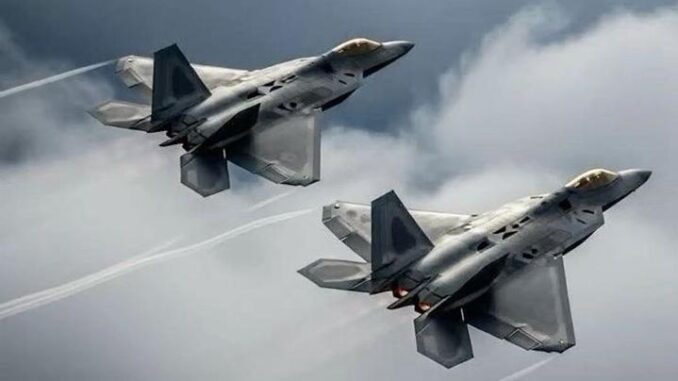
According to the Telegraph report, on Friday February 2, 2026, in a significant development concerning geopolitical tensions with Iran, U.S. defense officials have informed President Donald Trump that the extensive deployment of American naval and air assets in the Middle East is projected to achieve operational readiness for potential air strikes by Saturday. This substantial military build-up, characterized as the largest since the 2003 Iraq invasion, encompasses long-range bombers and refueling aircraft strategically positioned to support offensive operations.
The briefing culminates the administration’s strategic intent to exert pressure on Tehran to secure concessions regarding its nuclear program, particularly following unsuccessful indirect negotiations and Iran’s continued enrichment of uranium to near-weapons-grade levels. The Trump administration views this heightened state of readiness as a critical leverage point, with officials emphasizing that any potential strike would aim to degrade Iran’s nuclear and missile capabilities without committing to a full-scale ground invasion.
These preparations are unfolding amidst a backdrop of diplomatic friction, notably the United Kingdom’s refusal to permit U.S. forces to utilize RAF bases, such as Fairford, for launching attacks, citing concerns regarding potential violations of international law. British Prime Minister Sir Keir Starmer’s decision has prompted President Trump to withdraw support for the UK’s Chagos Islands agreement with Mauritius, an accord involving sovereignty transfer while retaining the Diego Garcia base under a long-term lease.
President Trump publicly criticized this agreement on Truth Social, indicating that the U.S. may need to independently utilize Diego Garcia to counter threats from what he described as an “unstable and dangerous Regime” in Iran. This divergence highlights differing transatlantic priorities, with the UK prioritizing legal constraints and de-escalation, while the U.S. advocates for a more assertive stance to compel negotiations.
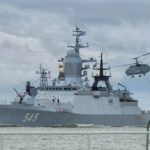
Concurrently, Iran has intensified its defensive measures, including joint naval exercises with Russia in the Persian Gulf and fortifications around key nuclear sites, signaling its readiness to retaliate against any aggression. Tehran’s leadership has consistently rejected U.S. demands to dismantle its ballistic missile program and cease support for regional proxies, characterizing the American military build-up as provocative imperialism.
Meanwhile, the Iranian regime is contending with escalating protests, which have been met with severe crackdowns.These internal pressures could potentially weaken the regime’s resolve but also heighten the risk of asymmetric responses, such as disruptions to global oil supplies through the Strait of Hormuz. The UK’s deployment of additional fighter jets to the region anticipates potential fallout, signaling allied preparations for broader conflict spillover…. Discover More

Leave a Reply