Saudi Arabia has announced that it will bypass the Strait of Hormuz by using pipelines for oil imports and exports, a strategic move that insulates the kingdom from the disruptions currently choking one of the world’s most critical energy chokepoints.
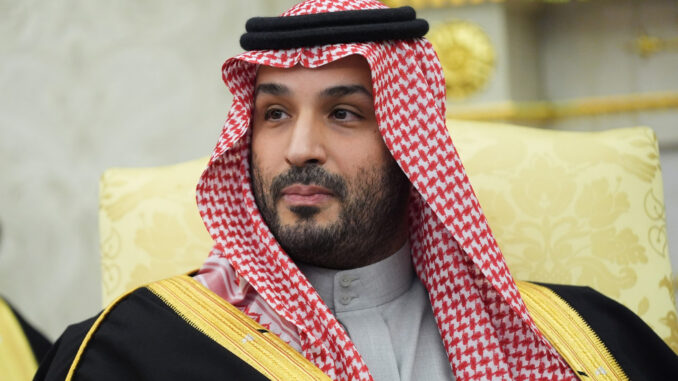
The claim, shared alongside an image of Crown Prince Mohammed bin Salman, positions Saudi Arabia as the one major Gulf oil producer capable of maintaining supply to global markets even as Iran continues to restrict shipping through the Strait. The kingdom is not waiting for diplomacy to reopen the waterway. It is routing around it entirely.
Saudi Arabia’s East-West pipeline, also known as Petroline, is already operating at full capacity, moving roughly seven million barrels of crude per day from oil fields in the Eastern Province across the country to export terminals on the Red Sea coast. The pipeline was built precisely for this scenario, to provide an alternative route that does not depend on passage through the Strait of Hormuz. With the Strait now effectively closed to normal commercial traffic, the pipeline has become the kingdom’s primary export artery, and Saudi officials are exploring options to expand capacity further if the disruption continues.
Other Gulf states including the United Arab Emirates also operate pipelines that bypass the Strait, though none match the scale or capacity of Saudi Arabia’s system. The UAE’s Abu Dhabi Crude Oil Pipeline can carry approximately one point five million barrels per day to the port of Fujairah on the Gulf of Oman, providing a secondary route that avoids the contested waterway. Together, these pipelines allow the two largest Gulf producers to continue exporting significant volumes of oil even while the Strait remains under Iranian control or threat.
The strategic advantage this gives Saudi Arabia and the UAE is enormous. While other producers in the region, including Iraq, Kuwait, and Qatar, remain dependent on the Strait for the vast majority of their exports, Saudi Arabia can sustain its revenue streams and meet contractual obligations to buyers in Asia, Europe, and beyond. That independence translates into political leverage, market stability, and the ability to weather a prolonged crisis without the economic collapse that a total export shutdown would trigger.
The announcement also carries a message to Iran. By demonstrating that it can function without the Strait, Saudi Arabia reduces Tehran’s leverage in the current standoff. Closing the waterway was supposed to hold the global economy hostage and force concessions from the United States and its allies. If the largest producer in the region can simply bypass the closure, the strategic value of Iran’s position diminishes, and the costs of maintaining the blockade begin to outweigh the benefits.
For the global oil market, Saudi Arabia’s ability to keep supply flowing is a stabilising factor in an otherwise catastrophic situation. Oil prices have already surged by approximately fifty percent since the Strait disruptions began, and further tightening of supply would push prices into territory that triggers recessions in energy-importing economies worldwide. Saudi crude reaching Asian refineries through Red Sea ports rather than the Persian Gulf does not solve the global supply problem entirely, but it prevents the situation from becoming exponentially worse….See More




Leave a Reply