


At least more then ten people, including children and students, were killed on March 29, 2026, when gunmen attacked the Angwa Rukuba community in Jos, Plateau State. The assault, which fell on Palm Sunday, sent shockwaves through a city that has buried too many of its own to attacks just like this one. By the following day, hundreds of residents had poured into the streets in open defiance of a twenty-four-hour curfew imposed by authorities, their anger directed not only at the attackers but at a government and security apparatus they believe has repeatedly failed to protect them.
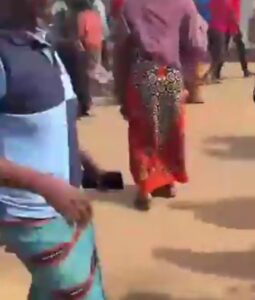
Raw footage from the protest showed crowds marching through Jos, chanting demands for justice and calling for the right to defend themselves. The scenes were not those of a city experiencing an isolated breakdown. They were the images of a population that has reached a breaking point after years of violence met with what many describe as official indifference.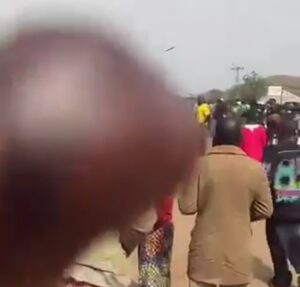
The attack has been widely referred to as the Palm Sunday Massacre, a label that carries both religious and emotional weight in a state where ethno-religious violence has claimed thousands of lives over the past two decades. Plateau State sits along one of Nigeria’s most volatile fault lines, where largely Christian farming communities and predominantly Muslim herding groups have clashed repeatedly over land, resources, and identity. The violence is rarely spontaneous. It follows patterns, targets familiar communities, and arrives with a regularity that makes the absence of preventive action difficult to explain.
The Angwa Rukuba attack is not without recent precedent. In 2025, over one hundred and twenty Christians were killed in similar assaults across Plateau State, according to reports by local non-governmental organisations. Those killings drew condemnation and calls for action, but the cycle continued. Each attack produces statements, each statement is followed by silence, and each silence is eventually broken by the next attack.
The decision by residents to defy the curfew was itself a statement. Curfews in Jos have become associated not with protection but with containment. Many residents view them as tools that restrict victims while doing nothing to apprehend perpetrators. The protesters made clear through their chants and placards that they have lost faith in the capacity or willingness of federal security forces to defend them. Some went further, openly calling for communities to organise their own defence in the absence of reliable state protection….See More





Leave a Reply