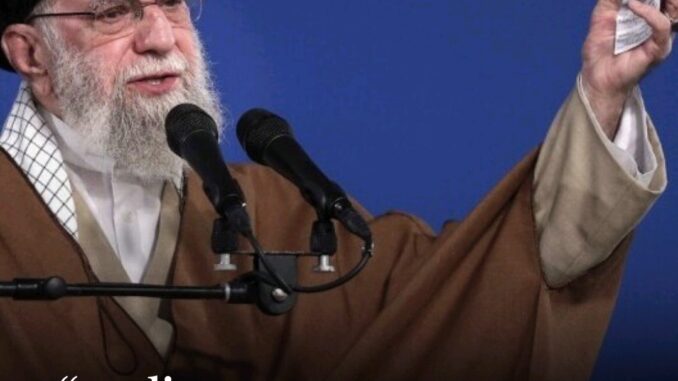
Iran’s Supreme Leader, Ayatollah Ali Khamenei, has reiterated Tehran’s long-standing position toward Israel, describing it as a “malignant cancerous entity that must be uprooted,” according to remarks attributed to him by Iranian state-linked media.
The statement reflects Iran’s consistent ideological opposition to Israel, which has been a central pillar of the country’s foreign policy since the 1979 Islamic Revolution. Iranian leaders have repeatedly refused to recognize Israel’s legitimacy, instead expressing support for Palestinian resistance groups and calling for fundamental political change in the region.
Khamenei’s comments come amid heightened tensions in the Middle East, following ongoing conflicts involving Israel and armed groups aligned with Iran across Gaza, Lebanon, and other parts of the region. Analysts say such rhetoric often intensifies during periods of regional instability and is aimed at reinforcing Iran’s position among its allies and supporters.
Israeli officials have consistently condemned statements from Iranian leaders, describing them as threats to Israel’s existence. Israel has long cited Iran’s rhetoric and military activities as justification for maintaining a strong defense posture and pursuing international pressure against Tehran.
Western governments have also expressed concern over Iran’s language toward Israel, warning that inflammatory statements could contribute to further escalation in an already volatile region. Iran, however, maintains that its stance is political and ideological, centered on opposition to what it describes as occupation and injustice against Palestinians.
Observers note that while such statements are not new, they underscore the deep-rooted hostility between Iran and Israel, which continues to shape security dynamics across the Middle East. Diplomatic efforts to reduce tensions between the two adversaries remain limited, with both sides viewing each other as major strategic threats.
As regional conflicts persist, analysts warn that sustained verbal and political confrontations could increase the risk of miscalculation, further complicating prospects for stability and dialogue in the region.
If you love political news or like to get more news happening around the globe, use the button below to get more verified news happening around Nigeria and the world today.





Leave a Reply