Russia has publicly declared that any attempt to seize control of the Strait of Hormuz from Iran is futile, describing the strategic waterway’s defence as an objective reality that even the United States cannot overcome. The statement, reported by BRICS News on April 1, 2026, represents Moscow’s most direct backing of Tehran since the US-Iran conflict escalated and positions Russia firmly against Western efforts to alter the balance of power at one of the world’s most critical energy chokepoints.
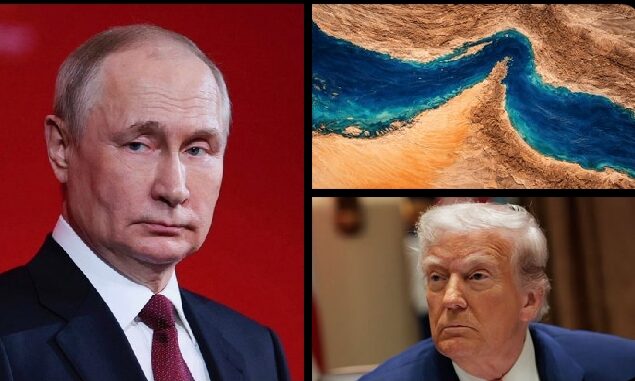
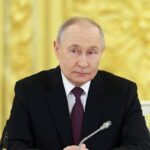
The post was accompanied by images of President Vladimir Putin, an aerial view of the narrow waterway, and President Donald Trump, a visual arrangement that left no ambiguity about the geopolitical stakes involved. This is no longer a conflict between two nations. It is a confrontation between blocs, with BRICS-aligned powers lining up behind Iran and Western allies increasingly divided over how far to follow Washington.
The Strait of Hormuz carries approximately twenty percent of the world’s daily oil supply. Every barrel that passes through its narrow corridor connects producers in the Persian Gulf to consumers across Asia, Europe, and beyond. Control of the Strait is not merely a military question. It is an economic one with consequences that reach every nation dependent on stable energy markets. Disruption has already driven oil prices up by an estimated fifty percent, and any further escalation threatens to push those prices into territory that would trigger recessions in vulnerable economies worldwide.
Russia’s intervention changes the calculus significantly. Moscow brings its own military capabilities, intelligence networks, and diplomatic weight to Iran’s corner. More importantly, it signals to the broader BRICS coalition, which includes China, India, Brazil, and South Africa, that resistance to Western dominance over global energy infrastructure is a shared priority. China, as Iran’s largest oil customer, has its own strategic reasons to oppose any American takeover of the Strait. India, heavily dependent on Gulf oil imports, watches nervously from a position that requires it to maintain relationships with both sides.
For Nigeria, the implications are layered. As Africa’s largest oil producer and a nation whose government revenue remains disproportionately tied to crude exports, any disruption to global oil markets lands directly on the national balance sheet. Higher prices could temporarily benefit Nigeria’s export earnings, but the instability that produces those prices carries risks that far outweigh short-term gains. Investment flows slow, shipping costs rise, and the imported goods that Nigeria depends on become more expensive at a time when inflation is already punishing households across the country….See More




Leave a Reply