

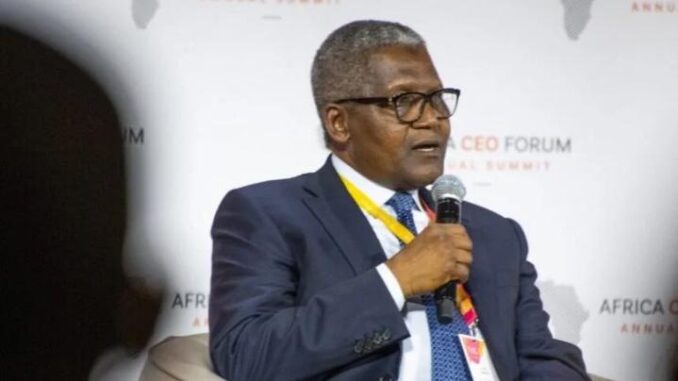
According to a report by Punch Newspaper on Tuesday, March 24, 2026, Chairman and CEO of Dangote Group, Aliko Dangote, has cautioned that the ongoing crisis in the Middle East may compel Nigeria and other African nations to reinstate work-from-home measures similar to those implemented during the COVID-19 pandemic if the conflict persists.
He emphasized that the economic ramifications of the situation could be severe, particularly given the continent’s existing debt challenges and reliance on energy imports.
Dangote’s remarks highlight growing concerns over how global geopolitical tensions are affecting domestic economic stability and operational capacities in African countries.
Dangote shared his concerns following a private meeting with President Bola Tinubu at the president’s residence in Ikoyi, Lagos.
He pointed out that oil price fluctuations resulting from the Middle East conflict are likely to create additional strain on national economies that are already contending with high fiscal deficits.
The discussion reportedly focused on strategies to mitigate the economic impact of rising energy costs and the potential ripple effects on businesses, supply chains, and overall industrial productivity.
In his observations, Dangote drew attention to international responses to similar energy challenges, using Indonesia as a key example.
He noted that the Indonesian government, in response to escalating energy pressures, had reduced the workweek to four days and was contemplating a full transition to remote work if conditions failed to improve.
He suggested that such measures were designed to curb operational costs while attempting to maintain economic activity, offering a potential reference point for African nations facing comparable pressures.
The Dangote Group chairman underscored the seriousness of the situation by stressing that energy volatility directly impacts business operations and household expenditures.
The escalation in oil prices, combined with inflationary pressures, could compel governments and corporations to adopt unprecedented measures to stabilize economies.
Dangote indicated that proactive planning and policy adjustments are necessary to avert severe disruptions in both public and private sector activities.
He also emphasized that African countries, which are heavily dependent on imported energy and external financing, are particularly vulnerable to shocks arising from geopolitical crises.
Dangote highlighted the interconnectedness of global energy markets and local economic stability, suggesting that disruptions in supply chains or surging costs could necessitate temporary operational changes, including remote work arrangements for employees in various sectors.
While detailing the measures being considered in other countries, Dangote explained that these interventions were aimed at balancing economic activity with cost containment.
He stressed that the aim is to reduce pressure on national economies while ensuring that businesses and essential services continue to function effectively.
By citing international examples, he provided a context for potential policy adaptations in Nigeria and across Africa to address the ongoing crisis.
Dangote concluded his remarks by saying, “In some countries today what they’ve done, they asked everybody to work from home because they cannot afford it. I think Indonesians also only go to work four days a week. And they will look at the situation if it doesn’t improve, they will ask everybody not to go to work anymore…..See More



Leave a Reply