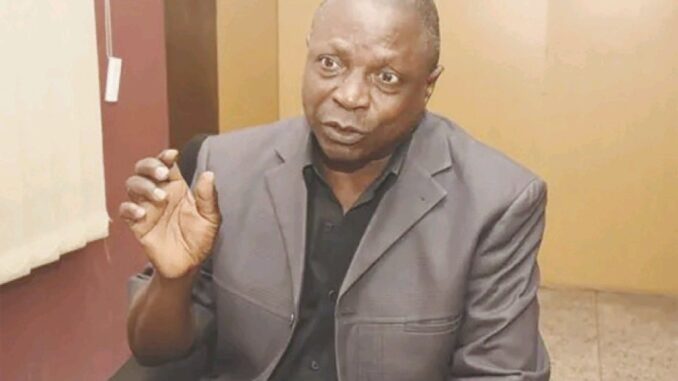
Dr. Adetokunbo Pearse, a public affairs commentator and the convener of the Reset Lagos chapter of the Peoples Democratic Party (PDP), during an interview with The Sun correspondent, suggested that the influence of state governors does not necessarily translate into electoral victories at the presidential level, and he also spoke on the insecurity which is affecting the image of the country.
When informed that analysts believed Tinubu had effectively secured victory even before election day, he acknowledged the concern but provided context on the regional political landscape. He noted that the South-South, once a stronghold of the PDP, had largely shifted to the APC, as had much of the South-East.
In the South-West, only two states remained outside APC control, while the North-Central region was predominantly aligned with APC. He further observed that, of the 13 states in the Northwest and Northeast, eight were held by APC, raising questions about the PDP’s immediate prospects.
He explained that there were two ways to assess the situation. First, he noted that, based on statistics from the 2023 presidential election, the number of governors a party controls does not necessarily determine the number of states it can win in a presidential race. According to him, there was no direct correlation between governorship strength and presidential election outcomes.
He said, “Let me give you an example: In 2023, APC had 22 states governors, Tinubu won in only 12 of those states. PDP had about 12 governors, Atiku won in only five or six of those states. The most dramatic of all examples is Peter Obi, who had no governor at all and won 12 states, including Lagos and Abuja. So, it is on record that the issue of governor is just a smokescreen; it’s just optics to give the impression that we have won everything.”
He outlined three points regarding the party’s position. First, he pointed to instances of governors defecting from the PDP to the APC, noting that such moves had limited impact on the grassroots.
He cited the example of former Governor Ifeanyi Okowa and his deputy, Sheriff, who defected to the APC and attempted to persuade PDP members in their state to follow them. According to him, the majority of party members—over 80 percent—refused to leave, with only the officers they had appointed and close associates going along. He noted similar patterns in Akwa Ibom and other states, including the ongoing situation in River State, where he emphasized that the electorate traditionally continues to support the PDP regardless of gubernatorial defections.
Secondly, he explained that in states where sitting PDP governors had joined the APC, upcoming primaries in June would allow the PDP to field new candidates for governorship elections. He suggested that even if a former PDP governor successfully secured an APC ticket—which he considered unlikely—the PDP would still present its own candidate, allowing voters to make their choice.
Finally, he remarked on the broader national mood, noting that Nigerians were experiencing heightened dissatisfaction due to economic hardship, insecurity, and general unhappiness with the current administration. He described the current regime as particularly unpopular and said that the public’s discontent was unprecedented in recent memory.
If you love political news or like to get more news happening around the globe, use the button below to get more verified news happening around Nigeria and the world today.



Leave a Reply