According to Al-Jazeera, just one hour after joint US-Israeli airstrikes hammered Iranian targets—including sites near Supreme Leader Ayatollah Ali Khamenei’s residence and President Masoud Pezeshkian’s offices—Tehran unleashed a rapid, multi-front retaliation that exposed what analysts are calling a grave strategic miscalculation by Washington and Tel Aviv.
Iranian ballistic missiles and drones targeted US military assets across the Gulf and beyond, hitting key bases in Qatar (Al Udeid Air Base), Bahrain (US Navy Fifth Fleet headquarters), the UAE (Al Dhafra Air Base), Kuwait (Ali Al Salem Air Base), and Jordan (Muwaffaq al-Salti base).
Explosions rocked Manama, Doha, Abu Dhabi, and other locations, with smoke rising over Bahrain’s naval facilities and air defenses activating in multiple states.
Gulf nations scrambled to intercept incoming threats; Qatar’s Patriot systems downed at least one missile, while the UAE and Bahrain condemned the attacks as violations of sovereignty and reserved rights to respond.
Unlike the brief 12-Day War earlier, Iran appeared fully prepared, retaining strategic initiative in timing and scale.
Tehran’s strikes demonstrated it was neither deceived nor surprised, launching what state media described as the opening phase of a “crushing” and “decisive” response.
Iranian officials invoked self-defense under UN Article 51, warning that all US and Israeli assets remain legitimate targets with “no red lines” left.
The swift escalation suggests Washington and Tel Aviv underestimated Iran’s readiness and proxy network resilience.
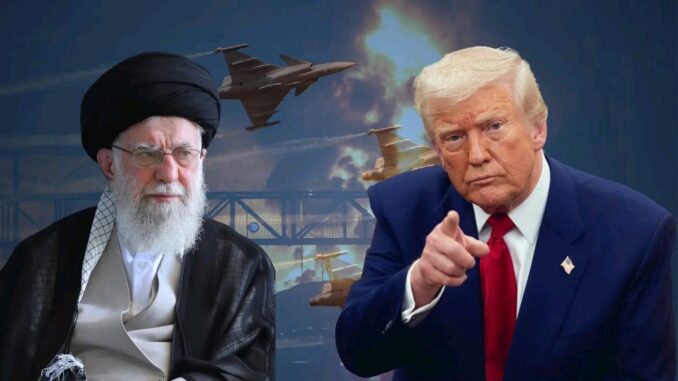
President Donald Trump’s announcement of “major combat operations” (codenamed Operation Epic Fury by the US, Lion’s Roar by Israel) aimed to neutralize nuclear and military threats, but the immediate backlash has drawn the US into a protracted, multi-domain conflict.
Regional fallout includes airspace closures, heightened alerts in Saudi Arabia and Kuwait, and fears of oil disruptions as Brent crude surges.
Analysts warn this could trap the US in a long, costly entanglement with deep consequences for Gulf stability, global energy markets, and broader alliances.
Iran’s leadership signals a drawn-out confrontation, shifting the initiative and raising risks of wider involvement. Diplomatic off-ramps appear distant as explosions continue and retaliation waves build……See More





Leave a Reply