
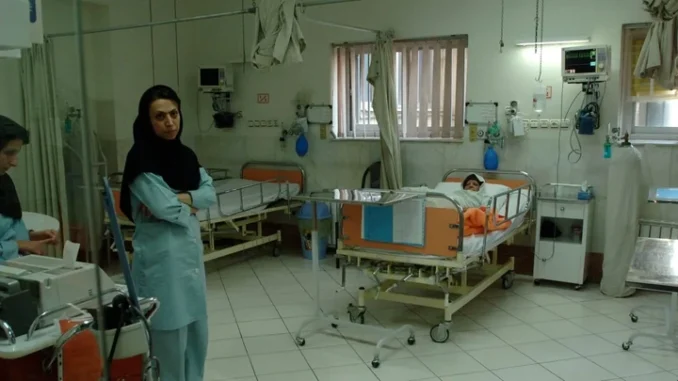
According to the Jerusalem Post, a strike by nurses demanding better pay and improved working conditions has reportedly ended with assaults, detentions and dismissals, shining a spotlight on the mounting pressures facing Iran’s healthcare system.
According to Iran International, nurses at Fayazbakhsh Hospital in Tehran walked off the job on July 30 after months of struggling with heavy workloads, low wages and chronic staff shortages. The protest reflected growing frustration among healthcare workers who say they are being pushed to their limits while receiving little support.
The report alleged that authorities responded by detaining several nurses, beating some of those involved and confiscating their mobile phones. It also claimed that hospital management later suspended or dismissed an undisclosed number of staff who took part in the strike.
The unrest appears to be spreading beyond the capital. Radio Zamaneh, an independent Persian-language media outlet based in Amsterdam, reported that nurses also staged protests in the western cities of Iranshahr and Ilam, underscoring wider dissatisfaction across the profession.
The Nurses’ Protest Coordination Council said some healthcare workers have gone unpaid for as long as 10 months, leaving many struggling to make ends meet.
“We are nurses, not slaves, and we will not submit to forced labor,” the council said in a statement.
Neither Iranian authorities nor the management of Fayazbakhsh Hospital had publicly responded to the allegations of assault, detention or the reported disciplinary measures at the time of publication.
The protests come as senior nursing officials warn that Iran is grappling with a worsening shortage of healthcare workers. Dr. Yousef Rahimi, first vice president of the Supreme Council of the Nursing Organization, has urged the presidential office to approve additional funding and introduce a special allowance to help narrow salary gaps within the Health Ministry.
“Implementing the special allowance is the only solution to compensating for the wage gap between different groups in the Health Ministry. Certainly, the special allowance, together with the ‘recruitment allowance,’ can help address salary disparities. The Health Ministry has requested a recruitment allowance, but it appears that the response to the ministry’s request has been negative,” he said.
Rahimi said the average monthly salary of 25 million tomans no longer covers the cost of living, warning that poor pay is driving many nurses to leave the profession or seek opportunities abroad.
“When income is insufficient to meet living costs, workers choose to migrate to other countries or leave their jobs. Even if they do not choose professional migration or travel abroad, they lack sufficient motivation to provide services and work without concentration. Ultimately, those receiving healthcare services suffer from these conditions,” he warned.
Mehr News Agency reported that officials are reviewing a package of support measures, including tax exemptions, boarding houses and additional benefits for nurses. However, with an estimated 5,000 nurses leaving the profession each year, many fear the crisis will continue to deepen unless meaningful reforms are introduced…See_More






Leave a Reply