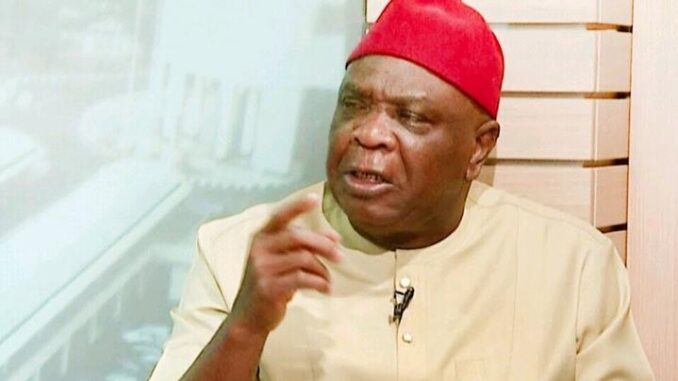
Chief Dan Ulasi, former Chairman of the Peoples Democratic Party (PDP) in Anambra State, has recalled a period in Nigeria’s political history when a northerner served as the Mayor of Enugu City under the National Council of Nigeria and the Cameroons (NCNC).
Speaking during an interview with Signature TV, Ulasi said the development reflected the level of political inclusiveness that existed during the early years of Nigeria’s political history.
According to him, Samuel Goomsu (S.G.) Ikoku, a prominent politician at the time, defeated his own father in an election for the Eastern Regional House of Assembly.
Ulasi said the situation did not create hostility between father and son, as both continued to maintain a strong family relationship despite their political differences.
Recalling the incident, Ulasi said, “A northerner was Mayor of the city of Enugu under NCNC. S.G. Ikoku defeated his father in the state assembly election.”
He explained that after winning the election, Ikoku still returned to the same family home where his father lived.
According to Ulasi, the peaceful relationship between the two men surprised him, prompting him to ask Ikoku how he managed to maintain harmony with his father after defeating him politically.
He said, “When we formed PRP, I asked S.G., ‘How did you manage to live in the same house with your father?'”
Ulasi recalled that Ikoku explained that political differences did not change the respect he had for his father.
In his words, “He said, ‘He is my father. He owned the house. When I come back, my mother would give me food.'”
The elder statesman said the story demonstrated how political disagreements were handled in some families during that era, with relationships remaining intact despite differences in political interests.
He noted that Nigeria’s early political leaders often competed fiercely during elections but maintained personal relationships outside politics.
Ulasi argued that the example serves as a reminder that political differences should not destroy family ties or social relationships.
He said the incident reflected a period when political competition was based on ideas and public service rather than personal attacks.
The former PDP chairman added that Nigeria’s political history contains several examples of individuals from different ethnic backgrounds working together and occupying important positions.
He maintained that such examples should encourage Nigerians to embrace unity and tolerance despite political, ethnic or regional differences…See_More

Leave a Reply