
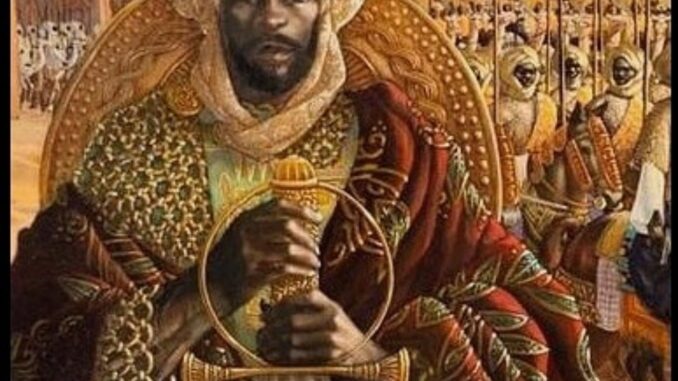
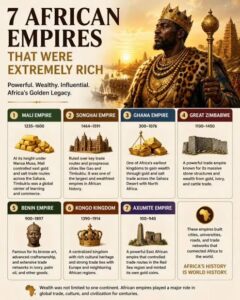
When people talk about medieval wealth and power, Europe’s kings and Italian trading cities usually come first. Rarely mentioned is an African empire that, at its peak, controlled more gold than most European monarchs could imagine. That was the Mali Empire, a West African kingdom that dominated trade, scholarship, and diplomacy between the 13th and 15th centuries.
A Kingdom Built on Gold and Salt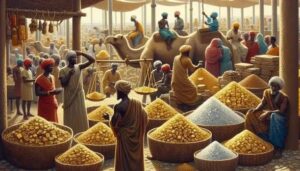
Mali rose to prominence after the decline of the Ghana Empire. At its height under leaders like Sundiata Keita and later Mansa Musa, it stretched across modern-day Mali, Senegal, Gambia, Guinea, Niger, Nigeria, and Mauritania.
Its wealth came from geography. Mali sat between the gold fields of the south and the salt mines of the Sahara. In the medieval economy, both were priceless. Salt preserved food and was used as currency in the Sahel. Gold from Bambuk and Bure financed empires and trade networks that reached North Africa, the Middle East, and Europe.
Arab historians described Mali’s rulers as extraordinarily rich. Ibn Battuta, who visited in 1352, noted the order, security, and abundance he saw on the Niger River.
Mansa Musa: The Man Who Shook the World Economy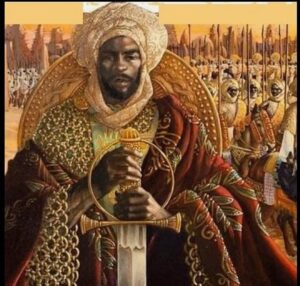
The name most associated with Mali’s wealth is Mansa Musa, who reigned from about 1312 to 1337. In 1324 he made the hajj to Mecca with a caravan of thousands of people, hundreds of camels, and so much gold that he distributed it freely in Cairo and other cities along the route.
The effect was immediate and dramatic. His spending devalued gold in Egypt for more than a decade. Contemporary accounts suggest his fortune was so vast that later economists have struggled to put a number on it. Some modern estimates have called him one of the richest people in recorded history, wealthier than most European kings of the same period.
But Musa’s pilgrimage was more than a display of riches. It put Mali on the world map. After his return, Muslim scholars, architects, and merchants came to Mali in greater numbers.
Timbuktu: A Center of Learning, Not Just Trade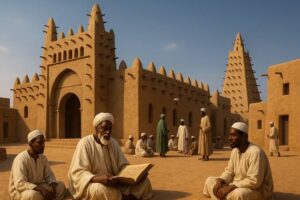
Mali’s capital shifted, but its intellectual heart became Timbuktu. Under Mansa Musa and his successors, the city built the Sankore Madrasah and the great mosques of Djinguereber and Sidi Yahya.
Timbuktu housed tens of thousands of manuscripts on astronomy, law, medicine, mathematics, and theology. Its university attracted students from across the Muslim world. At a time when literacy was limited in much of Europe, Mali was funding libraries, copying houses, and endowed chairs of learning.
Trade brought the gold. Scholarship gave the empire lasting influence.
Several factors have kept Mali out of mainstream history books. First, European accounts of Africa often began with the transatlantic slave trade, skipping the centuries before it. Second, much of Mali’s record survives in Arabic manuscripts and oral traditions that were not widely translated until recent decades. Third, colonial narratives emphasized European discovery and downplayed African states that had complex governments, courts, and economies long before contact.
Archaeology and digitization projects are changing that. Thousands of Timbuktu manuscripts are now being preserved and studied. Historians are re-centering Mali in the story of global trade, finance, and education.
Mali declined after the 15th century due to internal succession struggles, the rise of the Songhai Empire, and shifts in trans-Saharan trade routes. But its legacy remains.
It showed that Africa was not on the margins of the medieval world. It was at the center of a global economy. Its rulers commanded wealth that could destabilize foreign markets. Its scholars built institutions that rivaled those of the Islamic Golden Age…See More



Leave a Reply