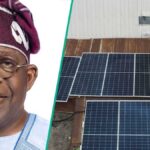
Media personality Oseni Rufai has criticised the Lagos State Government over the enforcement of permit fees for solar installations in government-owned social housing estates, describing it as ironic to charge residents who are providing their own electricity amid persistent power outages.
In response, the state clarified that the fees are administrative charges tied to property alteration regulations and apply only to its social housing estates, not private homes.
Rufai’s comments, shared in a public post, questioned the logic of imposing fees on residents who resort to solar energy due to unreliable public electricity supply.
He argued that citizens should not be financially burdened for seeking alternative power solutions, especially in a country where grid supply remains inconsistent. His remarks quickly gained traction online, drawing strong reactions from members of the public.
Reacting to the controversy, Lagos State authorities explained that the charges are not targeted at solar energy itself but are standard administrative fees required for structural or property modifications within government-owned estates. The state cited existing regulations overseen by agencies such as the Lagos State Physical Planning Permit Authority and the Lagos State Building Control Agency. According to officials, any alteration to buildings in social housing estates requires approval to ensure safety, uniformity, and compliance with planning standards.
The government stressed that the policy does not apply to privately owned homes outside state-run estates. Officials maintained that the intention is regulatory oversight rather than revenue generation, noting that similar permit processes exist for other forms of building modifications. They argued that solar panel installations may involve structural adjustments that must be assessed for safety reasons.
Despite the clarification, many Nigerians reacting online expressed frustration and anger over the policy. Several users described the fees as another example of government agencies seeking revenue from citizens already struggling with economic hardship. Others questioned why residents should pay additional charges when they are compensating for what they see as the government’s failure to provide stable electricity.
Some commenters also raised concerns about affordability, arguing that renewable energy solutions like solar power should be encouraged rather than subjected to additional administrative hurdles. A few, however, acknowledged the need for regulatory oversight to prevent unsafe installations that could pose risks to residents in densely populated estates….See More





Leave a Reply