Starting in 2027, smartphones sold in the European Union will be required to have user-replaceable batteries designed for greater durability and more charging cycles
The European Union’s Battery Regulation (2023/1542) will require smartphones and similar portable devices sold within the bloc to feature user-replaceable batteries starting February 2027.
Under the new rule, batteries must be removable using common tools and without the need for heat or chemical solvents. The policy is aimed at reducing electronic waste, extending device lifespan, and giving consumers greater access to affordable repairs.
The regulation forms part of the EU’s broader environmental and circular economy strategy. Lawmakers say sealed-in batteries have contributed to planned obsolescence, where consumers replace entire devices once battery performance declines.
By mandating easier battery replacement, the EU hopes to encourage longer use of smartphones and cut down on the growing volume of e-waste generated across member states.
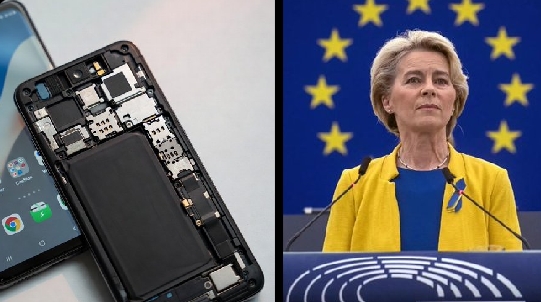
Images circulating alongside discussions of the policy show a smartphone with an exposed, swappable battery, as well as European Commission President Ursula von der Leyen, highlighting the political backing behind the reform.
EU officials have framed the regulation as a win for consumers and the environment. The rules specify that batteries must be removable with “commercially available tools,” meaning users should not need specialized equipment or professional assistance to carry out replacements.
Supporters of the measure argue that it will lower long-term costs for consumers. Instead of paying for expensive manufacturer repairs or replacing devices entirely, users would be able to purchase new batteries at a fraction of the cost.
Environmental advocates also say the move will significantly reduce waste and the environmental footprint associated with mining raw materials used in battery production.
“The goal is to make sustainable products the norm in the EU market,” the European Commission said when outlining the regulation.
Officials have stressed that improving durability and repair access is central to tackling climate change and resource depletion.
However, the policy has sparked debate within the tech industry and among consumers. Critics warn that requiring removable batteries could affect the sleek, slim designs that dominate the smartphone market.
Some analysts suggest it may be more challenging for manufacturers to maintain high water and dust resistance ratings, features that rely heavily on sealed constructions.
There are also concerns that redesigning devices to meet the new standards could increase manufacturing costs for major brands such as Apple and Samsung, potentially leading to higher retail prices.
Industry observers note that phone makers moved away from removable batteries over the past decade to improve structural rigidity, battery capacity, and waterproofing.
Reintroducing swappable designs may require significant engineering adjustments. Still, some experts argue that innovation could balance durability with compliance, especially given the four-year transition period before enforcement begins.
The regulation applies to smartphones, tablets, and other similar portable electronics sold in the EU market, regardless of where they are manufactured.
Companies that fail to comply could face penalties or restrictions on selling non-conforming products within the bloc.
As the 2027 deadline approaches, manufacturers are expected to begin redesigning devices to meet the EU’s standards. Whether the rule reshapes global smartphone design trends or remains largely confined to the European market will become clearer in the coming years….See More






Leave a Reply