Edo State Governor Monday Okpebholo has publicly urged young people in the state to enlist in the Nigerian Army, framing the appeal as a patriotic call to service amid widespread insecurity including banditry, insurgency linked to ISWAP, and attacks on communities across northern and central Nigeria.
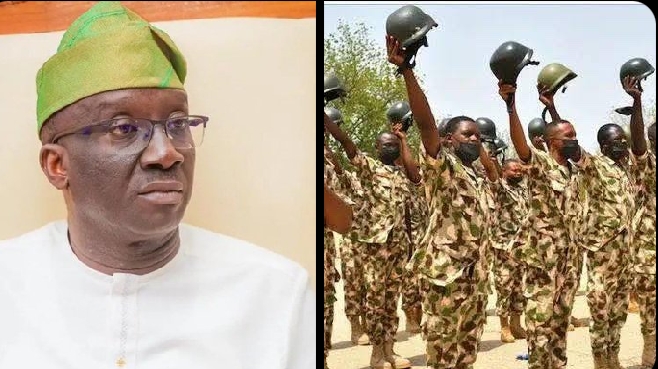
The statement, shared by Nigeria Stories alongside a portrait of the governor and an image of soldiers in formation holding helmets, was positioned as a passionate appeal for national duty and an opportunity for career advancement through military service. The response from Nigerians, however, was not gratitude or enthusiasm. It was a demand for the governor to lead by example.
The core of the backlash centres on a single fact. Governor Okpebholo has four children of military enlistment age, and none of them are known to be serving in the Nigerian Army or any branch of the armed forces. That detail, raised repeatedly in the replies, has turned the governor’s appeal into a test of sincerity and a flashpoint for broader frustrations about the gap between the sacrifices political elites ask of ordinary Nigerians and the privileges they secure for their own families.
“He has four children. If the army is such a great opportunity, why are none of them enlisted? Let him send his own kids first, then come back and talk to us,” one widely shared comment read.
The sentiment is not unique to this governor or this statement. It reflects a pattern that Nigerians have observed for decades. Political leaders, government officials, and the wealthy send their children to private schools abroad, secure them positions in multinational companies or family businesses, and shield them from the hardships and dangers that define life for the majority. Meanwhile, they call on the children of the poor to join the military, the police, or other public service roles that offer low pay, inadequate equipment, and high risk of death or injury in conflicts that seem to have no end.
The Nigerian military, particularly the Army, has been engaged in multiple theatres of conflict for over a decade. Soldiers are fighting Boko Haram and ISWAP in the northeast, battling bandits and kidnappers in the northwest and north-central zones, and dealing with separatist agitations and communal violence in other regions. The casualty rates are significant, and the conditions under which soldiers operate are often substandard, with reports of inadequate weapons, delayed salaries, poor medical care, and limited support for families of fallen personnel. Asking young people to enlist under those conditions while your own children pursue safer, more lucrative paths abroad or in private sector roles is a message that does not land the way it is intended….See More







Leave a Reply