A newly built bus terminal in Kugbo, Nyanya area of Abuja, attributed to Federal Capital Territory Minister Nyesom Wike and reportedly part of a fifty-one billion naira package of three terminals, suffered significant structural damage on April 7, 2026, after a heavy rainstorm and windstorm struck the Nigerian capital.
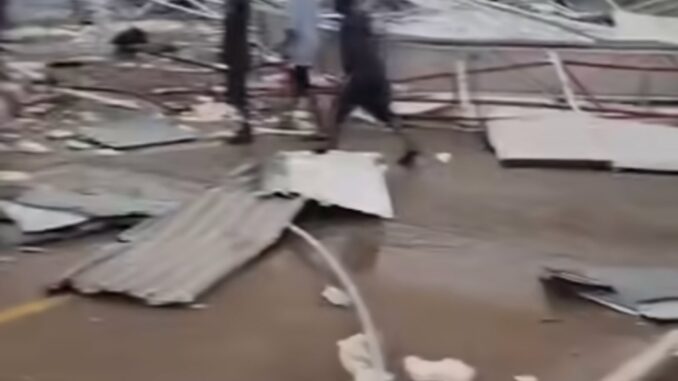
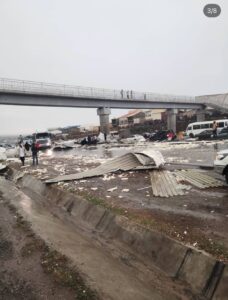
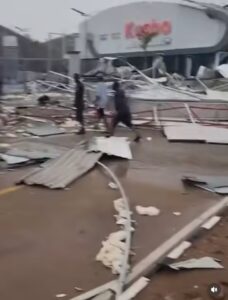
Sections of the terminal’s roof were blown off and scattered onto the Nyanya-Keffi Expressway, causing severe traffic gridlock as debris blocked lanes and left vehicles trapped.
Eyewitness videos and images circulating online showed collapsed roofing materials, exposed structural frames, and crowds gathering to assess the damage. The incident has reignited debates about the quality of public infrastructure projects in Nigeria, the accountability of contractors, and the value Nigerians are receiving for the billions spent on construction.
The Kugbo terminal was one of three new bus terminals inaugurated in June 2025 as part of efforts to modernise public transportation in Abuja. The others were located in Mabushi and the Central Business District. Together, the three terminals were reported to cost fifty-one billion naira, though viral claims have often attributed thirty billion naira specifically to the Kugbo site. Fact-checkers have disputed that narrower figure as misleading, clarifying that the fifty-one billion covered the entire package. Regardless of the exact breakdown, the sum is substantial, and the expectation that infrastructure built at that cost should withstand a rainstorm is not unreasonable.
The terminal had not yet become fully operational since its inauguration. The FCT Administration was still awaiting Federal Executive Council approval for its management and operational framework, meaning the facility had been sitting largely unused for nearly a year before the roof failure. That detail has added to the frustration. The terminal was not destroyed by heavy use or years of wear and tear. It failed after minimal exposure to the elements, raising questions about the materials used, the construction standards applied, and the level of oversight during the project’s execution.
Reports prior to the collapse indicated that there had been early complaints about the roof showing signs of weakness, with sections allegedly peeling or appearing unstable even before the terminal was put into service. If those warnings were documented and ignored, it would suggest a failure not just of construction but of maintenance, inspection, and accountability systems that should have identified and corrected deficiencies before they became catastrophic.
The contractor responsible for the terminals, identified in some reports as Planet Projects Nigeria Limited, has not issued a public statement on the collapse. Neither has the FCT Administration provided details on whether an investigation has been launched, whether the contractor will be held liable, or whether repairs will be funded from the original contract or require additional public expenditure….See More





Leave a Reply