Pope Leo XIV has stated that there will be no change to Catholic Church doctrine on homosexuality and transgender issues, reaffirming longstanding teaching that sexual acts are morally ordered only within heterosexual marriage and that biological sex is a fixed gift from God that cannot be altered or redefined.
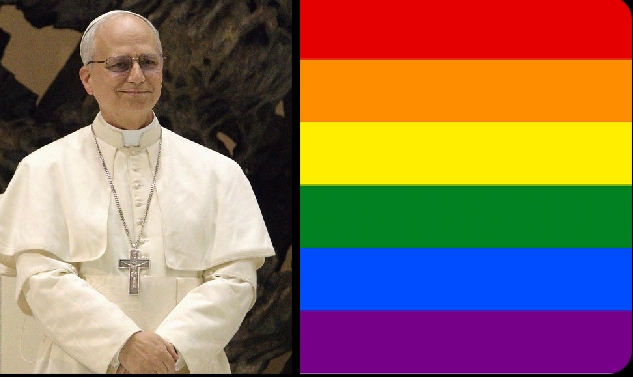
The statement, reported by GlobalUpdates24 and accompanied by an image of the pontiff positioned next to a pride flag, was posted on April 6, 2026, and has generated significant engagement across social media, with reactions sharply divided between those who praise the Pope for doctrinal consistency and those who criticise the Church for exclusion and failure to evolve on questions of human dignity and inclusion.
The Catholic Church’s position on these issues is not new. It has been consistent for centuries, rooted in scriptural interpretation, natural law theology, and the Church’s understanding of human sexuality as designed for procreation within the sacrament of marriage between a man and a woman.
The Church distinguishes between orientation and behaviour, teaching that while experiencing same-sex attraction is not sinful, acting on that attraction is. Similarly, the Church teaches that gender is determined by biological sex at birth and that attempts to transition or identify as a gender different from one’s biological sex are incompatible with Catholic anthropology.
Pope Leo XIV’s statement is significant not because it changes anything but because it closes the door, at least for now, on the hope that some within the Church and many outside it have held that the institution might soften or reinterpret its teachings in light of contemporary understandings of sexuality, gender identity, and human rights. Previous popes, including Pope Francis, were seen by some as opening space for dialogue and pastoral accompaniment of LGBTQ individuals even while maintaining doctrinal boundaries. Leo XIV’s statement suggests that under his leadership, those boundaries will not only be maintained but reinforced.
The image of the Pope next to a pride flag was a deliberate visual choice by the account that posted the statement, designed to highlight the tension between the Church’s teachings and the symbols and movements advocating for LGBTQ rights and inclusion. Whether the image was meant to criticise the Pope or simply illustrate the divide, the effect is the same. It places the statement in direct visual opposition to a movement that views the Church’s position as harmful, outdated, and incompatible with human dignity.
Reactions from traditionalist Catholics and conservative voices were overwhelmingly supportive. They praised the Pope for standing firm on doctrine in the face of cultural pressure to conform to secular values, framing the statement as evidence of moral courage and faithfulness to the teachings handed down through apostolic tradition. For this group, the Church’s refusal to change is not a flaw. It is proof of its divine authority and its role as a guardian of truth in a world that they believe has lost its moral compass.
Progressive Catholics and LGBTQ advocates responded with disappointment, frustration, and in some cases, anger. They argued that the Church’s refusal to change its teachings perpetuates harm against LGBTQ individuals, many of whom have been marginalised, rejected, or traumatised by religious communities that treat their identities as disordered or sinful. For them, the Pope’s statement is not just a doctrinal position. It is a pastoral failure that prioritises theological abstractions over the lived experiences and mental health of real people….See More







Leave a Reply