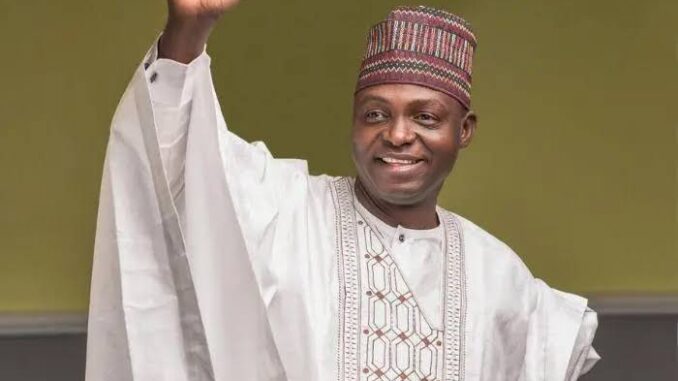
The National Chairman of the All Progressives Congress (APC), Nentawe Goshwe Yilwatda, has expressed optimism that Nigeria could become a developed nation by the year 2045 if the country successfully implements strategic economic and developmental reforms.
Yilwatda made the remarks while hosting the Ambassador of Vietnam to Nigeria, Bui Quoc Hung, at the APC national headquarters in Abuja. During the meeting, he highlighted the importance of learning from countries that have successfully transformed their economies over the years.
According to him, Vietnam’s economic progress offers valuable lessons for Nigeria. Vietnam, once considered one of the world’s poorer countries after years of conflict, has experienced significant economic growth over the past few decades through industrialization, export-driven policies, and investments in human capital.
“The biggest takeaway is the lessons we are learning from Vietnam—from migrating from a third-world country to a developing country,” Yilwatda said during the meeting.
He explained that Nigeria could follow a similar path by focusing on strategic economic planning, manpower development, and infrastructure investment.
“The roadmap is to ensure that by 2030, middle-income countries are stable, and by 2045, Nigeria will be a developed country,” he added.
The APC chairman also emphasized that the government is working on policies aimed at strengthening manpower development, improving education and skills training, and building critical infrastructure needed for long-term economic growth.
According to him, creating opportunities for young people and investing in infrastructure such as roads, energy, and technology will be essential in driving Nigeria’s economic transformation.
Nigeria, Africa’s most populous nation, has long sought to diversify its economy beyond oil dependence by expanding sectors such as manufacturing, agriculture, technology, and services.
Economic experts often point to Vietnam’s development model as an example of how consistent policies, foreign investment, and export-oriented industries can significantly transform a nation’s economy over time.
However, analysts note that achieving developed-country status requires long-term political stability, strong institutions, economic reforms, and significant investment in education and infrastructure.
Nigeria currently faces several challenges, including unemployment, infrastructure deficits, security concerns, and economic volatility, which many experts say must be addressed to achieve sustained growth.
Despite these challenges, policymakers and development planners have continued to promote long-term visions for the country’s economic future.
Yilwatda’s statement has sparked conversations among Nigerians, with some expressing optimism about the country’s potential while others remain cautious, emphasizing the need for consistent policy implementation and accountability.
Observers note that development goals spanning decades often depend on continuity in governance, effective leadership, and strong public-private partnerships….See More





Leave a Reply