Human rights activist and former presidential candidate of the African Action Congress, Omoyele Sowore, has said the recent increase in global crude oil prices should bring economic relief to Nigerians rather than deepen the hardship currently experienced across the country.
Sowore made the remarks during an interview aired on Voice TV Nigeria on Tuesday, March 10, 2026, where he discussed the economic implications of rising oil prices and examined the role of private investment in Nigeria’s energy sector.
During the interview, Sowore explained that although rising oil prices linked to global conflicts are not something to celebrate, they should still present an economic advantage for an oil-producing country like Nigeria.
According to him, higher crude prices mean increased revenue for the nation, which should ideally be used to improve the welfare of citizens.
He noted that with global oil prices reportedly climbing above 100 dollars per barrel, the country should be experiencing an improvement in its revenue position. Sowore argued that this development should translate into increased funds available to the government to support public services and reduce the financial pressure on citizens.
The activist questioned why Nigerians continue to face economic hardship despite the possibility of increased earnings from crude oil exports. In his view, the country should be in a position to provide greater economic relief to its people during a period when oil prices are high.
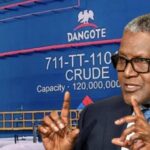
Sowore also used the interview to address the growing public excitement surrounding the Dangote Refinery project.
While acknowledging the scale of the project, he cautioned Nigerians against believing that private investments alone would solve the country’s economic challenges.
According to him, private businesses operate primarily to generate profit and should not be expected to function as social rescue mechanisms. Sowore emphasized that entrepreneurs who invest heavily in large-scale industrial projects do so with the expectation of financial returns.
To support his argument, he referred to developments in Nigeria’s cement industry following the privatization of state-owned assets years ago.
He claimed that the sale of government-owned cement factories at low prices eventually allowed private investors to dominate the market and generate significant profits from the sector.
Sowore suggested that the same pattern could occur in the petroleum refining industry, stressing that private investors are driven by business interests rather than a mandate to provide economic relief for citizens.
The activist also criticized what he described as a broader economic system that prioritizes profit-making over public welfare. He argued that under such conditions, powerful business figures and economic actors often benefit while ordinary citizens continue to struggle with rising costs of living.
Another key issue raised during the interview was the federal government’s failure, in his view, to build additional refineries while the Dangote Refinery was being constructed. Sowore questioned why the government did not take advantage of the same period to develop its own refining facilities.
He argued that if a private individual could build a refinery capable of serving a large portion of the country’s fuel demand, then the Nigerian government should have been able to establish multiple refineries of its own within the same timeframe.
According to him, the country could have developed several modern refineries that would strengthen national refining capacity and reduce reliance on privately owned facilities. Such a move, he said, would have given Nigeria greater control over domestic fuel production and pricing.
Sowore further claimed that government policies and support indirectly aided the development of the Dangote Refinery, raising questions about why similar support was not directed toward the construction of additional state-owned refineries….See More



Leave a Reply