
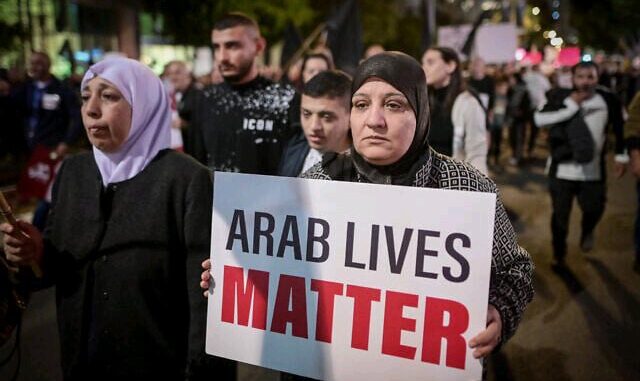
According to the Jerusalam post, traffic disruptions were expected across Israel on Sunday as the Arab community organized slow-moving protest convoys from multiple regions, converging on Jerusalem to protest what organizers say is the government’s failure to stem a deadly wave of violent crime.
The convoys, traveling from the north, center, and south, were set to meet near Jerusalem’s government quarter, where a mass rally was planned. Organizers warned that major highways would be affected for several hours as demonstrators sought to draw attention to the growing sense of fear and insecurity gripping Arab towns and cities.
According to figures cited by protest leaders, at least 12 people have been killed in the Arab community over the past week alone, bringing the death toll since the beginning of the year to 39. This marks a sharp increase compared to the same period last year, which recorded 30 killings. The previous year ended with a record 252 homicides in Arab communities nationwide, most of them linked to organized crime and inter-gang violence.
The protests are being led by the High Follow-Up Committee for the Arab Citizens of Israel, an umbrella body representing Arab political and civic leadership. The committee said the convoys are meant to amplify public pressure on authorities to act decisively against criminal organizations operating with near impunity.
“We want to voice a great cry of the grave distress felt by the Arab community. People are being murdered and injured every day,” said Jamal Zahalka, head of the committee, in remarks to the Walla news outlet. “Our whole community lives in fear of organized crime,” he added, accusing the government of “abandonment” that has created “a state within a state.”
One convoy departed from the northern city of Shfaram at 9 a.m., traveling south along the coastal highway. It was scheduled to join additional convoys at the Caesarea Junction and later at the Latrun interchange, before continuing together toward Jerusalem. Organizers estimated arrival at the government complex around 1:30 p.m.
In Jerusalem, Zahalka and Sakhnin Mayor Mazen Ghnaim were expected to read aloud a letter addressed to Prime Minister Benjamin Netanyahu and attempt to deliver it to him personally before his departure for Washington.
The surge in violence has already sparked weeks of protests in Arab municipalities, culminating in a large Arab-Jewish demonstration in Tel Aviv earlier this month. Critics have singled out National Security Minister Itamar Ben Gvir, who oversees the police, accusing him of failing to prioritize the crisis. Under his tenure, murder rates in Arab communities have reached unprecedented levels.
For families of victims, the protests are driven by despair as much as anger. Mohammad Nassar of Tira, whose son was killed last week in a triple homicide, told Ynet: “There is no end to this crime that is snuffing out young people who have still not seen anything in their lives.” Referring to Ben Gvir, he added, “The very fact that he is keeping quiet shows the level of disregard for people’s lives.”
The committee warned that if government policy does not change, it will call a general strike next week, potentially involving workers in health care, transportation, and construction. Talks are reportedly underway to broaden participation and protect workers from retaliation.
“We don’t want to lose people, we want to live our lives without danger, We are fed up,” said Tofik Kassum, whose relative was gunned down last week.
If you love political news or like to get more news happening around the globe, use the button below to get more verified news happening around Nigeria and the world today.






Leave a Reply