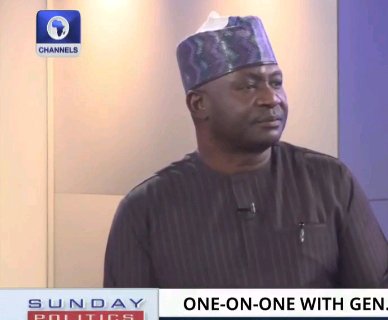
According to a report by Channels, on Monday February 2, 2026, Nigeria’s Minister of Defense, General Christopher Musa, has called on the nation to finally move past the ethnic grievances and historical conflicts that have stunted national development, declaring that continued dwelling on the Biafran civil war more than five decades after it ended serves no constructive purpose.
Speaking on Channels Television’s Sunday Politics, Musa expressed frustration that Nigeria remains trapped in cycles of ethnic recrimination and historical blame rather than focusing on building a united future. “We cannot now in 2026 still be talking about Biafran civil war and all. We should learn the lessons by now, we should use those lessons and avoid those things that got us to doing that,” the Minister stated emphatically.
The comments came during a discussion about the ethnic composition of the officers arrested in connection with last year’s failed coup attempt, which some observers noted appeared to follow certain regional and ethnic patterns reminiscent of previous coup attempts in Nigeria’s history, including the controversial 1966 coups.
Musa acknowledged the painful legacy of the Kaduna coup and the subsequent civil war, which continue to influence Nigerian politics and inter-ethnic relations. “The ethnic composition of these guys, the 16 officers that are being arrested, the composition, the ethnic and the regional composition of these people is suspicious,” the interviewer noted, asking whether the Minister saw deliberate ethnic patterns.
However, Musa dismissed suggestions of deliberate ethnic targeting by the coup plotters. “I think it’s an accident. I think it’s just an accident. I think he met just people that were around him and it so happens you know the military is like a family in that sometimes where you operate are people that you know around that area so probably that’s what happened,” he explained.
The Minister stressed that regardless of the ethnic makeup of the conspirators, focusing on such divisions perpetuates the very problems that have held Nigeria back since independence. “So many people were killed on both sides, everybody took casualties, everybody lost something but now we cannot continue to dwell on that because it will keep us down as individuals and no nation develops when there’s internal wrangling,” Musa argued.
He expressed particular pain at Nigeria’s continued reliance on colonial-era grievances to explain contemporary challenges. “I personally on a personal level I feel pained when till date we sit down and say it is because the colonial master did this. For heaven’s sake we are how many years? 60 thereabout and we’re still complaining about the same thing,” the Minister lamented.
Musa noted that Nigeria’s obsession with historical grievances stands in stark contrast to other nations that have overcome similar or worse circumstances. “We should have moved forward from that, far, far away from that. And you know they said the psychology say if a mad man tells you he’s mad he’s 60 percent okay. If we know that we have a problem, address this issue instead of continue to every day it is because it is north, south, east, west. It doesn’t do us any good and for how long are we going to continue like this?” he asked rhetorically.
Drawing comparisons with other developing nations, the Minister pointed to countries like Ethiopia as examples of nations transforming themselves despite historical challenges. “When you travel out you see countries moving forward even smaller countries. See what’s happening in Ethiopia, see how they transformed. We’re not the worst off in all these things but sometimes we have few individuals that always want to bring out this issue,” Musa observed.
The Minister placed particular responsibility on Nigeria’s elder statesmen, traditional rulers, and religious leaders to change the national narrative. “I’m appealing to our leaders especially our traditional rulers, our religious leaders, words are very powerful. When you come in and you say certain things you aggravate the whole issue on ground. They must seem to talk to unite the country not to divide it and that is very very important,” he urged.
Musa warned that inflammatory rhetoric from respected figures can have deadly consequences. “Because what you say today people could misinterpret what you are saying to mean something else and it will be so wrong because many people will have died probably because of one thing you said or didn’t say. So I think that’s very important for us to know especially our leaders, people that have been in government for so long,” he said.
Taking his argument further, the Defense Minister called for generational change in Nigeria’s leadership approach. “I think it’s high time let them allow this new generation to come in with a new mindset. If we have been doing this since independence and we’re nowhere I think there’s something wrong. If you’re doing the same thing for a long time and you’re not getting results which means you need to change what you are doing,” Musa declared.
He advocated for a deliberate break with the past, similar to transformations seen in other nations. “Let us give the new generation a new field. Let’s not poison their mind with what has happened in the past. Mistakes have been made from both sides, from all angles. Do we still continue to dwell on those mistakes? No. Let’s draw a line and say look that was the past. This is the present and we’re going towards the future. And I think that’s very critical,” the Minister argued.
Musa cited China’s transformation under leadership that deliberately broke with historical grievances as a model Nigeria could emulate. “If you read the history of China when Chairman Mao came, the same thing he did. He said look whatever it is that happened, that was old China. This is new China. Where is China today?” he noted.
The Minister insisted that Nigeria possesses all the necessary ingredients for success if it can overcome its self-imposed limitations. “We can achieve that because we have all the indices to make us succeed,” Musa stated confidently.
He acknowledged that a small minority of Nigerians perpetuate divisive narratives while the majority remain focused on progress. “We have very few individuals that always want to bring out this issue and I tell you they’re really very few. So we need to work on our strategic communication tool for people to understand very few people give us bad names in this world, very few, but we don’t celebrate the good ones,” the Minister observed.
If you love political news or like to get more news happening around the globe, use the button below to get more verified news happening around Nigeria and the world today.




Leave a Reply